
Make perfume last longer on skin by understanding that fragrance disappearing by lunch is rarely “bad perfume”; most of the time, it’s evaporation, skin chemistry, and application habits working against you.
If you want a real change in wear time, you need to think like performance testing: reduce how fast the top notes burn off, give the fragrance something to grip, and place it where heat and friction won’t strip it away.
What actually makes perfume fade faster
Fragrance longevity on skin is mainly a physics problem. Volatile aroma molecules evaporate. Heat speeds that up, dry skin gives less for the oils to cling to, and rubbing breaks the structure of the opening so it flashes off faster. Then there’s biology: your skin’s oil level, hydration, and even how much you sweat can change how a scent develops and how long it hangs on.
It also depends on the formula. Citrus, airy musks, many green aromatics, and sheer florals can wear close and fade quickly. Dense ambers, woods, resins, and many gourmands tend to last longer because they include heavier molecules and stronger fixatives. But you can still improve almost any fragrance with better prep and placement.
How to make perfume last longer on skin (start with skin prep)
If you do one thing differently, make it this: apply fragrance to hydrated skin. Hydration doesn’t “trap” scent in a magical way, but it slows evaporation and helps the perfume’s oils spread more evenly instead of sinking into dry patches.
Apply an unscented lotion or body cream 5-10 minutes before spraying. You want it absorbed, not slippery. If you moisturize and immediately spray onto wet lotion, you can blur the top notes and distort the opening.
If your skin is very dry, a richer cream usually outperforms a thin lotion. If you run oily, you may already get decent longevity, but moisturizing can still make the scent smell more consistent across the day.
The petroleum jelly trick – useful, but not for every perfume
A thin film of petroleum jelly on pulse points can extend wear because it creates an occlusive layer. The trade-off is projection. Many people notice the scent stays closer to the skin and feels “muffled,” especially for fresh or delicate compositions.
Use this when your goal is longevity without loud sillage – office days, flights, close-contact settings. Skip it when you want sparkle and lift.
Apply after a shower, but not on steaming-hot skin
Warm skin helps diffusion, which sounds good until you realize it also increases evaporation. Right after a hot shower, you’ll often burn through the opening faster.
Better approach: towel dry, moisturize, wait a few minutes, then spray once your skin is warm but not flushed.
Placement matters more than you think
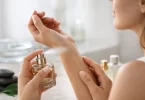
A common mistake is spraying only on wrists and then rubbing them together. Wrists move constantly, hit water when you wash hands, and get friction from sleeves. That’s the opposite of “long wear.”
Choose zones with less friction and less frequent washing. The inner elbows can work well if you don’t bend your arms all day. The chest can be excellent for longevity, but it’s also warm, so you may trade some top-note sparkle for depth and staying power. The back of the neck and behind the ears can perform well because they’re relatively protected.
If you want a fragrance to last and still project, use a split placement: one or two sprays on the torso for longevity plus a lighter spray higher up (neck or hairline area) for sillage.
Pulse points are not automatically the best points
Pulse points are warm, and warmth boosts diffusion. That can help a scent feel more present in the first hour, but it can shorten the life of volatile top notes. For many fresh fragrances, placing them on cooler areas (forearms, torso under clothing) can extend their usable life.
Stop rubbing – it really does change the wear
Rubbing breaks the opening and can make a fragrance smell flatter faster. It’s not that you “destroy molecules” in a dramatic way. It’s that you create heat and friction and force more evaporation early.
Spray, let it settle, and give it 60-90 seconds before putting on tight clothing over the area.
Use the right number of sprays (and space them)

Longevity is not always solved by spraying more. More sprays can increase projection, but it also increases the amount of top notes hitting the air at once. If the fragrance is already top-heavy, you can end up with a strong first 20 minutes and the same fade-out problem later.
Instead, think in distribution. Two sprays in one spot can behave worse than one spray in two different spots. A practical baseline for many eau de parfums is 3-5 total sprays across the body, adjusted for strength, environment, and sensitivity.
If you want “all day,” one of the most reliable techniques is timed reinforcement rather than over-application at 8 a.m. Keep a travel atomizer and do a light refresh on clothing or hair (more on that below) mid-day. That refresh often reads cleaner than piling on heavy sprays in the morning.
Layering for longevity (without turning it into a mess)
Layering is most effective when you’re not mixing five different scent directions. The goal is to build a base that lasts, then let your main perfume sit on top.
The simplest longevity layer is an unscented lotion. The next step is pairing with a matching body wash or body lotion in the same line if you have it. That can extend the “aura” because you’re scenting multiple surfaces, not just skin.
If you’re mixing brands, keep the base quiet: clean musk, soft vanilla, or a light amber in body care can help many perfumes last without changing their identity too much. The trade-off is that some crisp florals and citruses can lose their transparency when you add a sweet base. If you love the airy quality of a fragrance, prioritize hydration and placement over heavy layering.
Don’t ignore hair and clothing – but do it safely
Skin is a challenging surface because it’s warm and produces oils and sweat. Fabric and hair hold scent longer because they’re cooler and more porous.
Clothing application is one of the easiest performance upgrades. Spray from a bit farther away than you would on skin, and aim for areas that won’t be rubbed constantly (mid-torso, the inside of a jacket, the back of a shirt). Some fragrances can stain light fabrics, especially if they’re oily, dark, or resin-heavy, so test on an inside seam first.
Hair can also hold scent beautifully, but alcohol-based perfume can dry it out. A safer move is to spray a brush once, let it settle for a few seconds, then brush through. If you use dedicated hair mists, they’re designed for this job, but you can still be cautious with regular perfume.
Choose concentrations and styles that naturally last
If you’re comparing versions of the same fragrance, higher concentration often lasts longer, but not always. Eau de parfum can outperform eau de toilette, yet some eau de toilettes project more and feel stronger early on. Extrait concentrations can last longer, but they may wear closer and feel heavier.
More important than the label is the composition. If you consistently struggle with longevity, look for structures that are built to last: amber, woody-amber, leather, dense vanilla, resinous incense, and many modern musks. If you love fresh profiles, consider fresh scents with a woody or musky base, or plan for a mid-day refresh as part of the wear strategy.
Fix nose-blindness before you blame the perfume
Sometimes the perfume isn’t gone – your brain has tuned it out. This happens often with musks, ambroxan-heavy woods, and “clean” skin scents. You stop noticing it, but other people still can.
A quick test: ask someone you trust after a few hours, or smell a different area (like the inside of your shirt) instead of your wrist. If you’re constantly chasing the scent by reapplying, you can end up over-spraying while still feeling like it’s missing.
Environment and behavior can sabotage longevity
If you’re outside in heat, exercising, or moving between freezing AC and outdoor humidity, performance will change. Sweat and frequent handwashing are major killers. So is friction from tight sleeves, scarves, and collars.
If you know your day includes a lot of movement, put more fragrance on protected zones (torso, back of neck) and less on hands and wrists. If you work in a scent-sensitive environment, prioritize longevity layers (moisturizer, clothing) over high-projection spraying.
A realistic routine that works for most people
For a measurable improvement without turning fragrance into a complicated project, use this sequence: moisturize with an unscented lotion after your shower, spray once on your chest under clothing, once on the back of your neck, and once on a forearm you won’t wash constantly. Then leave it alone. If you want more presence, add one light spray to clothing from a distance.
This setup balances longevity (protected, hydrated skin) with sillage (a higher placement that moves with you). It also reduces the biggest causes of fade: friction, washing, and over-heating the scent.
If you want to go deeper on performance testing and what different scent structures tend to do on different skin types, PerfumeOnSkin.com approaches longevity as a wear problem you can troubleshoot, not a mystery you have to accept.
FAQs that match what people get wrong

Should you spray perfume on pulse points to make it last longer?
Pulse points can make a scent feel stronger early because they’re warmer, but that warmth can shorten the crispness of the opening. For longer wear, add at least one spray to a lower-friction, less-washed area like the torso.
Does Vaseline make perfume last longer on skin?
It can, especially on very dry skin, because it slows evaporation. The trade-off is that it can reduce projection and make some fragrances feel heavier.
Why does perfume last longer on other people than on me?
Skin hydration, oil level, sweat, and even how warm you run all affect evaporation and how quickly notes develop. Application habits matter too - wrists, rubbing, and frequent washing are common culprits.
Wear time is partly chemistry and partly technique. When you treat it like a repeatable system – prep, placement, and smart reinforcement – you stop chasing “stronger perfume” and start getting better results from the bottles you already own.
Leave a Comment