A musk fragrance can smell clean, creamy, powdery, warm, or skin-like depending on the formula and your body chemistry. That is why learning how to layer musk fragrances is less about following a fixed recipe and more about controlling texture, projection, and wear on your own skin.
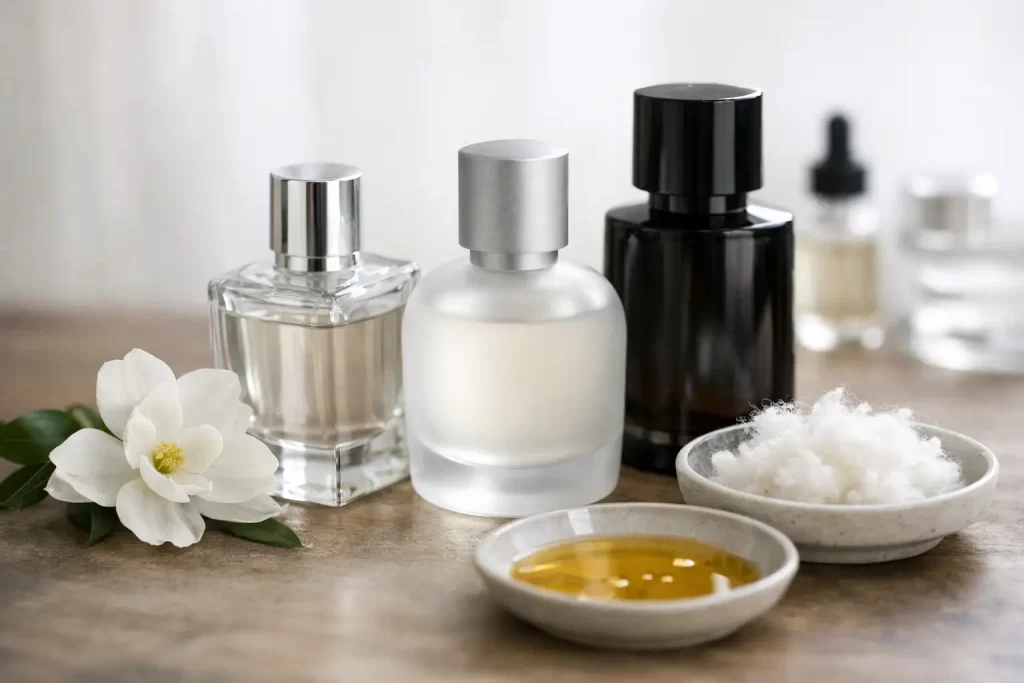
Musk is one of the easiest fragrance families to layer, but it is also one of the easiest to overdo. When the pairing works, musk adds softness, length, and a more natural transition between top, heart, and base notes. When it does not, the result can turn flat, soapy, overly sweet, or oddly dense. The difference usually comes down to choosing the right musk style and applying it in the right order.
Why musk works so well in layers
Musk often behaves like a connector note. Instead of dominating immediately, it can smooth sharper materials such as citrus, green notes, or pepper, and it can round out florals, woods, and amber accords. On skin, that matters because layering is not just about how two perfumes smell in the air. It is about how they develop together over several hours.
Most musk fragrances also sit closer to the skin than louder categories such as heavy oud or boozy amber. That makes them useful as a base when you want a custom scent that still feels wearable in daily life. If your goal is better longevity without turning a fragrance into something unrecognizable, musk is often the most forgiving place to start.
Start by identifying what kind of musk you have
Not all musk behaves the same way. Before you try to combine anything, smell your musk fragrance on clean skin for at least 30 minutes. Pay attention to whether it reads airy, laundry-clean, creamy, powdery, woody, sweet, or animalic. That profile tells you what it will add to another scent.
A clean musk usually boosts freshness and gives a just-showered effect. A powdery musk softens sharper perfumes but can mute bright openings. A creamy or skin musk tends to make florals and woods feel more intimate. A darker musk with warm, earthy, or animalic facets can add depth, but it needs more restraint because it changes the character of a fragrance quickly.
This first step matters because many layering mistakes happen when people treat all musks as neutral. Some are neutral enough to act like a primer. Others are strong stylists that pull the whole composition in a new direction.
How to layer musk fragrances without making them muddy
The cleanest way to layer is to choose one fragrance as the structure and the other as the modifier. In most cases, the musk should be the modifier unless it is a very sheer skin scent. If your musk is subtle, apply it first and then add the second fragrance on top. If your musk is stronger or heavier, use it sparingly over the top or on adjacent pulse points rather than directly underneath.
The reason is practical. Strong musks can blur a perfume’s opening and flatten contrast between the top and heart. That is helpful if a scent feels too sharp or thin on you, but not if you love its sparkling first hour. A light musk base can improve cohesion and help the second fragrance feel more anchored on skin. A heavy musk base can swallow detail.
Spray count matters more than people think. Start with a one-to-two ratio. For example, one spray of musk and two sprays of the main fragrance is usually safer than equal amounts. You can always add more. It is much harder to fix a layer that has become thick and diffuse.
Best fragrance families to pair with musk
Musk pairs well with florals because it adds body without always adding sweetness. Rose becomes softer, jasmine becomes creamier, and orange blossom often feels less sharp. If a floral perfume smells beautiful but disappears fast on your skin, a compatible musk underneath can improve the impression of lasting power.
Citrus also works well with musk, especially clean and white musks. Citrus notes burn off quickly on many people, and musk can help the fragrance settle into something smoother rather than vanishing after the opening. The trade-off is that too much powdery musk can dull the brightness that makes citrus appealing in the first place.
Woods and musk are one of the most reliable combinations if you want a more expensive-smelling result. Cedar, sandalwood, cashmere woods, and soft vetiver usually gain warmth and polish from musk. This is a strong option for office wear because it tends to improve longevity while keeping projection controlled.
Vanilla and amber with musk can be excellent, but this is where balance becomes more critical. Musk can make a sweet scent feel more skin-like and less edible, which many people want. But if both fragrances are dense in the base, layering can create too much warmth and not enough lift. In that case, use fewer sprays or separate placement.
Pairings that need more caution
Heavy gourmands, intense ouds, and very powdery iris fragrances can become crowded with the wrong musk. The issue is not that they can never work together. It is that they often compete in the drydown, where musk is strongest.
If you want to layer musk with a bold scent, test it in zones instead of stacking directly. Apply the main fragrance on the chest or neck and the musk on wrists or inner elbows. You will still get blending through movement and body heat, but with more definition. This approach is especially useful if your skin amplifies base notes.
Also be careful with multiple clean musks from different perfumes. People assume clean plus clean always equals easy. In practice, the combination can turn overly soapy, metallic, or abstract depending on the synthetic musk materials involved. If two fragrances already have a strong musky backbone, full layering may be unnecessary.
Use skin chemistry to guide placement
If your skin runs dry, musk can disappear faster than expected unless it is paired with richer notes. Applying an unscented moisturizer first often helps the layer hold together better and slows evaporation. If your skin runs warm or tends to amplify sweetness, place the richer fragrance lower on the body and keep the musk closer to cooler pulse points so the mix does not become too thick.
Placement changes performance. Layering both perfumes on the exact same spot gives the most integrated result, but it also raises the risk of muddiness. Using nearby points creates a more breathable effect and lets each fragrance keep some identity. For many people, that is the better way to learn what actually works.
At PerfumeOnSkin, this is usually the missing step. People judge a layering combination too quickly without accounting for how their skin changes the drydown. A pairing that smells perfect on paper can turn dense on warm skin, while a combination that seems simple at first can bloom beautifully after an hour.
A practical method for testing musk layers
Test one pairing at a time and wear it for a full day. Spray the musk on one arm and the full combination on the other if you want a side-by-side reference. That makes it easier to tell whether the musk is improving longevity, softening harshness, or just making the scent quieter.
Keep notes on three things: the opening after 10 minutes, the heart after one to two hours, and the drydown after four hours or more. If the opening improves but the drydown feels flat, reduce the musk or switch to separate placement. If the fragrance smells better later but projects less than you want, try keeping the musk as a base and increasing the top fragrance by one spray.
You do not need a large collection to do this well. One clean musk, one creamy musk, and a few perfumes from different families are enough to learn your preferences quickly.
When musk layering is actually worth it
Layer musk when a perfume feels too sharp, too brief, too sweet, or slightly unfinished on your skin. Do not layer just because layering sounds creative. The best combinations solve a specific problem. They add softness to a floral, make a woody scent more intimate, or stretch the wear of something airy.
If you already love a fragrance exactly as it is, layering may not improve it. Sometimes the smartest move is to leave the formula alone and just adjust your spray placement.
Musk rewards a measured approach. A small change can make a fragrance feel more natural, more polished, and better matched to your skin – which is usually the whole point of layering in the first place.
Be the first to comment