
You know the moment: you add a second fragrance because the first one feels too simple, and ten minutes later it smells like two strangers arguing on your skin. That is not your nose being “picky.” It is chemistry, volatility, and timing.

Layering works when you treat perfume like a structure, not a pile. Two scents can be beautiful together, but only if they share a direction (note family), agree on intensity (projection), and develop at compatible speeds on your skin.
What “clashing” actually means on skin
Clashing is usually one of three problems.
The first is competing top notes. Citruses, aromatic herbs, aldehydes, and “pink pepper” style openings can be loud and short-lived. If you stack two attention-grabbing openings, you get a sharp, chaotic first 20 minutes.
The second is mismatched bases. Heavy amberwoods, dense patchouli, smoky resins, and sweet gourmands sit close to the skin and linger. If the bases disagree, the clash can last all day.
The third is different performance profiles. One fragrance might be an airy skin scent while the other projects. When you layer them, the stronger one dominates and the blend feels accidental.
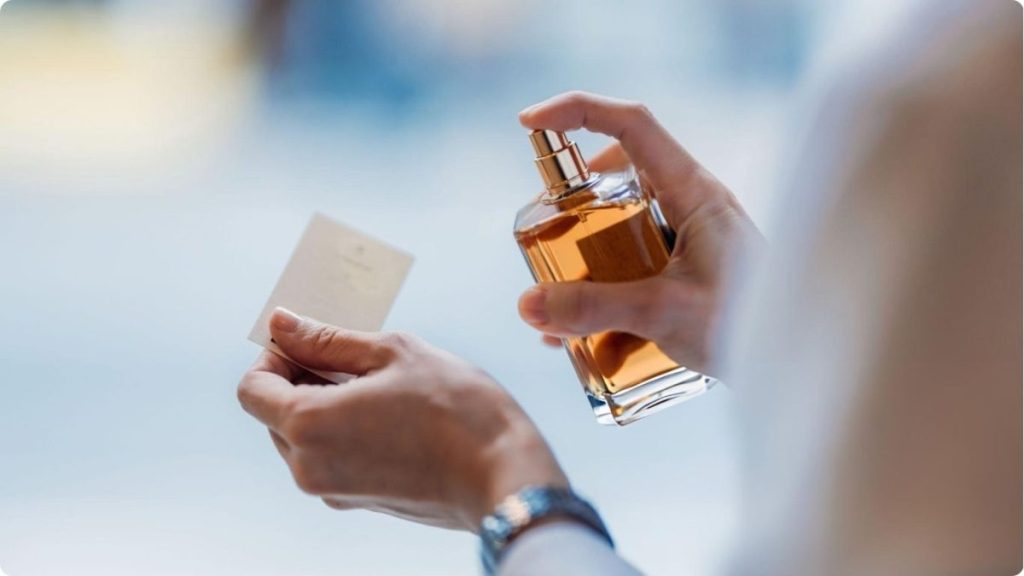
Your skin chemistry amplifies all three. Warmer skin can push volatile top notes harder, dry skin can make woods feel scratchier, and oilier skin can hold onto sweet musks and ambers longer. So the same pairing that works on a blotter card can fight on your wrist.
How to layer perfumes without clashing: start with roles
A reliable way to prevent clashes is to assign each fragrance a job. Think in roles rather than “two equal perfumes.”
A base fragrance supplies the lasting backbone: musk, vanilla, amber, sandalwood, tonka, soft woods, or a quiet skin-scent style. A feature fragrance provides the personality: a floral heart, a juicy fruit accord, a spicy profile, or a more defined theme like leather or incense.
When both scents try to be the feature, you get competition. When one supports and one leads, the blend reads as intentional.
Choose one anchor note and build around it
If you want a simple framework, pick one anchor category and keep both perfumes in its orbit. That does not mean the scents must be “the same.” It means they should share a center of gravity.
Vanilla and tonka often anchor sweet blends. Musks anchor clean blends. Sandalwood and cedar anchor woody blends. Rose, jasmine, and orange blossom anchor florals. Ambers and resins anchor warm blends.
If you cannot name a shared anchor between the two, you can still experiment – but expect more trial and error.
The “family match” approach (fastest way to avoid discord)
Most successful layering happens within neighboring families, especially for beginners.
Fresh citrus with fresh musk can read like a longer-lasting cologne. A floral with a soft vanilla can feel smoother and rounder. A woody scent over a clean musk can add depth without turning muddy.
The hardest pairings are those that fight in vibe and texture: a bracing aquatic with a dense syrupy gourmand, a smoky incense with a bright shampoo-like floral, or a green galbanum-heavy scent with a candy fruit bomb. These combinations can work, but they need careful dosing and placement to avoid a “split personality” effect.
Control intensity first, then adjust the smell
Most people try to fix clashing by changing notes. Usually the fix is dosage.
If one perfume has strong sillage, treat it like seasoning. Use one spray (or even a half-spray) and let the other do the heavy lifting. If both are strong, do not stack full sprays of both on the same spot.
A practical rule: if you can smell a perfume clearly from arm’s length after 10 minutes, it is a high-impact fragrance for your skin. Layer it lightly or keep it off your central heat points (neck and chest).
Placement matters more than you think
Layering does not have to mean “spray on top of spray.” You can blend in the air, but you can also build a scent cloud.
Try putting the base on warmer zones (chest, inner elbows) and the feature on cooler zones (forearms, back of the neck). This gives you a controlled mix as you move, rather than a forced mash-up in one exact spot.
If you want a more fused blend, put them on the same spot but separate them by time (see the next section).
Timing: the simplest way to stop top-note chaos
The most common clash happens early because both fragrances are shouting their openings.
Instead, apply the base fragrance first and give it 10 to 20 minutes to settle. Once the top notes calm down and you are closer to the heart, add the feature fragrance lightly.
This creates a smoother transition because you are layering hearts and bases, not two competing openings.
If you are layering specifically to improve longevity, reverse it: put the feature on first (lightly), let it dry down, then add a clean base musk or soft woody scent to extend the wearing experience without reintroducing a loud top.
Use your skin chemistry as the tie-breaker

Two people can layer the same pair and get different results because skin pulls notes differently.
If your skin amplifies sweetness, be cautious stacking gourmands, vanillas, and ambers. You may need a dry counterweight like cedar, vetiver, or a clean musk base to keep the blend breathable.
If your skin turns woods bitter or smoky, avoid piling multiple woody-amber bases. A floral heart or a sheer citrus-musk can lift the structure.
If your skin eats fragrance quickly, layering can help – but it has to be built around a base that actually lasts on you. A strong base on someone else might disappear on very dry skin. In that case, moisturizing first (unscented lotion) can matter more than the second perfume.
A repeatable testing method (so you stop guessing)
When you are figuring out how to layer perfumes without clashing, test like you are running a small experiment.
Use one forearm for the layer and the other as a control. Apply your base fragrance on both arms. On one arm, add the feature fragrance after 10 to 20 minutes. Now you can smell what the second perfume changed, rather than trying to remember what the first one was doing.
Smell at three checkpoints: around 5 minutes after the second application, around 45 minutes, and around 3 hours. If the blend only smells good at one checkpoint, it is not a reliable layer for real life.
Do not test right after showering with heavily scented body wash or deodorant. Those products behave like a hidden third layer.

Common clash scenarios and the fix
“It smells sharp and screechy”
This is usually competing top notes or too much on one spot. Fix it by spacing in time, reducing sprays, or separating placement. If both perfumes have bright openings (citrus, aldehydes, aromatic herbs), let one dry down before adding the other.
“It turned muddy or dusty”
That is often too many heavy base materials together: amberwoods, patchouli, thick vanilla, or sweet musks. The fix is to keep one base and make the other scent lighter, or use the second fragrance only on clothing (lightly) so it projects without saturating the same skin area.
“One perfume disappears and the other takes over”
That is a performance mismatch. Use the weaker fragrance as the feature, but apply it closer to your nose (upper chest) and keep the stronger one farther out (forearms) with fewer sprays. You can also flip the timing so the strong scent becomes the base and the lighter scent is refreshed later.
“It smells good up close, but the trail is weird”
This is a sillage problem: what you smell on skin is not what others smell in the air. Usually the sharper materials are projecting more than you realize. Fix it by cutting the brighter fragrance quantity in half, or by avoiding layering two fragrances that both have strong diffusive materials (often modern ambers and certain musks).
Layering with scented products: helpful, but easy to overdo
Body lotion, hair mist, and deodorant can either support layering or create clashes you cannot identify.
If you want predictable results, keep your skincare and deodorant either unscented or within the same family as your base. A clean musk lotion under a floral perfume is low risk. A heavily fragranced coconut body butter under a sharp citrus cologne is a common clash.
Hair holds fragrance differently than skin. Spraying a lighter, fresher layer into hair can give you a soft halo without adding density to the skin blend. Just keep it light and avoid saturating hair with high-alcohol formulas.
When layering is not the best tool
Sometimes the right answer is not “add another perfume.” If a fragrance feels too sweet, too loud, or too thin, layering can help – but it can also magnify the issue.
If you consistently dislike a perfume’s base on your skin (for example, it turns plasticky, sour, or harsh), layering rarely fixes it because the base is what lasts. In those cases, using it on clothing only, or reserving it for very short wear, may be more satisfying than trying to rescue it with another scent.
Also consider the occasion. Layering can create a beautiful personalized signature, but it can be risky in close quarters like offices, flights, and clinics where projection matters more than creativity.
A simple starting blueprint you can trust
If you are new to layering, start with a base that behaves like a “primer” on your skin: clean musk, soft vanilla, gentle sandalwood, or a sheer amber. Then choose one feature scent you already love and use half the amount you normally would.
That approach keeps the blend readable, improves wear time, and teaches you what your skin does with different materials. If you want more structure and skin-performance focused layering ideas, PerfumeOnSkin.com is built around exactly that kind of repeatable on-skin testing mindset.
Layering is not about making perfume louder. It is about making it fit you better – smoother in the opening, clearer in the dry down, and more consistent from your skin to the air around you. The best combo is the one you can recreate on a regular Tuesday without thinking twice.
Save It on Pinterest


Leave a Comment