Step outside on a hot, sticky afternoon and a perfume you loved in spring can suddenly feel louder, sweeter, or strangely flat. That is why learning to review perfumes for humid weather matters. Heat and moisture change how fragrance lifts off skin, how far it projects, and which notes start to dominate after an hour or two.
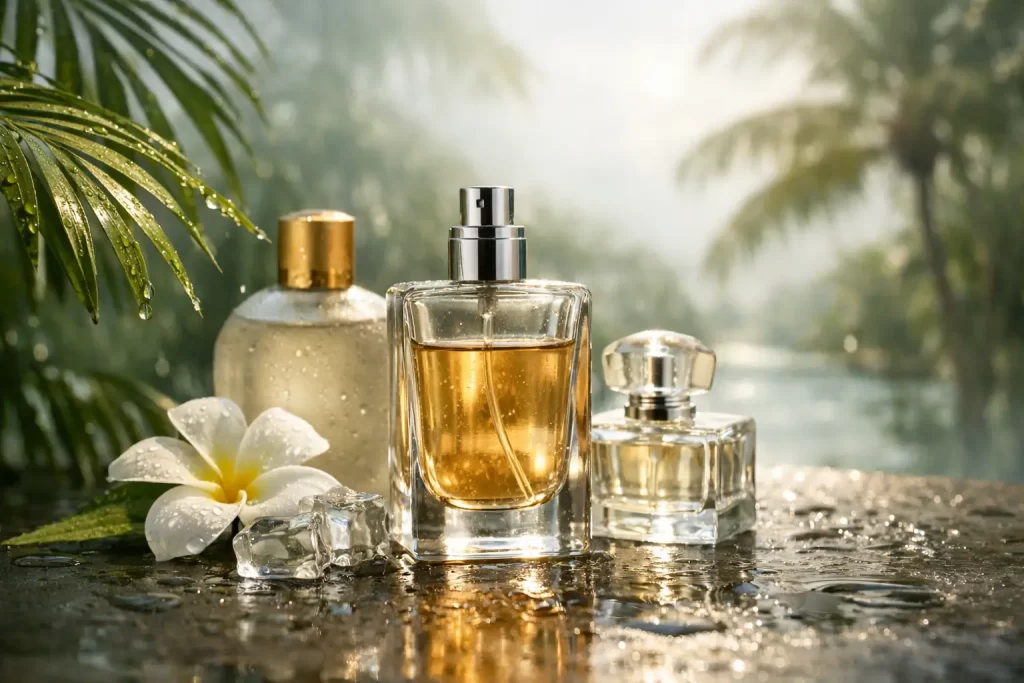
A useful warm-weather review is not just about whether a scent smells nice. It should tell you how the fragrance behaves on skin when sweat, body heat, and humidity amplify parts of the formula. For anyone trying to avoid a costly blind buy, the real question is simple: does this perfume stay fresh, balanced, and wearable when the air is heavy?
Why humid weather changes perfume performance
Humidity usually increases diffusion. In plain terms, fragrance molecules rise from the skin more easily, so perfumes can smell stronger and more expansive than they do in cooler air. A scent that feels soft indoors may project much more outdoors, especially in the first 30 to 90 minutes.
This matters because composition reacts differently under heat. Citrus, green, and aromatic notes often feel sparkling at first, but they can burn off faster than expected. Dense vanilla, amber, syrupy florals, and heavy patchouli can become thick or sticky if the blend is not well balanced. White musks and aquatic notes can go either way depending on skin chemistry – clean and airy on one person, sharp or metallic on another.
Skin chemistry adds another layer. Oily skin may hold fragrance longer, but in humid weather it can also push sweeter or heavier base notes forward. Drier skin may lose the bright top notes quickly. If you are writing or reading reviews without accounting for the wearer’s skin type, climate, and activity level, the advice will only be half useful.
How to review perfumes for humid weather the right way
A strong review starts with testing conditions that match real life. Spray a fragrance on clean skin, not just a blotter, and wear it in actual humid weather if possible. Air conditioning can mask how a perfume behaves, so it helps to test both indoors and outside.
Use a consistent method. Two to four sprays is enough for most eau de parfums in heat. More than that can make almost any fragrance seem oppressive, which says more about application than formula. Note where you sprayed it, because neck application often feels stronger in summer than forearm application.
Then evaluate the fragrance in stages. The opening matters, but humid weather reviews should focus even more on the heart and drydown. Many perfumes smell pleasant in the first ten minutes. The real test is whether they still feel clean, controlled, and comfortable after an hour of warmth.
What to measure in a humid-weather perfume review
Start with freshness, but define it clearly. Fresh does not only mean citrus. It can also mean green, mineral, airy floral, tea-like, aromatic, or lightly woody. The key is whether the perfume feels breathable rather than dense.
Next, assess projection. In humidity, moderate projection is often the sweet spot. A perfume that stays too close to skin may disappear fast outdoors, but a fragrance with aggressive projection can become tiring in close quarters. For practical reviewing, it helps to describe whether the scent stays within personal space, creates a noticeable scent bubble, or fills the room.
Longevity should be judged with context. Eight hours of strong wear might sound impressive, but if the first three hours are cloying, that is not a positive result. In humid conditions, balanced wear matters more than maximum wear time.
Finally, track texture. This is one of the most overlooked parts of fragrance reviewing. Ask whether the perfume feels crisp, watery, powdery, creamy, syrupy, or dense on skin. In hot weather, texture often decides whether a fragrance feels refreshing or overwhelming.
Notes and styles that usually perform best
The safest categories for humid weather tend to be citrus aromatics, green fragrances, tea scents, light florals, airy musks, and woods with a dry profile. Vetiver, neroli, bergamot, petitgrain, lavender, grapefruit, fig leaf, basil, mint, and transparent jasmine structures often work well because they cut through heat without turning heavy.
That said, there are trade-offs. Citrus-led perfumes can smell excellent for the first hour and then fade quickly. Aquatics can feel clean but occasionally read synthetic on warm skin. White florals can be beautiful in humidity if they are sheer and balanced, but if they lean indolic or creamy, they may become too rich for daytime wear.
Sweet gourmands are the category most likely to struggle, though not always. A restrained coconut, soft vanilla, or salted skin scent can work near the beach or on summer evenings. The issue is concentration and density. In humid air, sweetness expands fast, and what felt cozy in cool weather can become exhausting.
Red flags when you review perfumes for humid weather
A perfume may not be wrong in general but wrong for the climate. One red flag is sugar buildup. If the fragrance gets noticeably sweeter after 20 to 40 minutes in heat, it may feel sticky for the rest of the wear.
Another is sourness. Some fruity florals and synthetic musks turn sharp or fermented on hot skin, especially when sweat is involved. This does not mean the perfume is poor quality. It means the formula may not suit your chemistry in humid conditions.
Watch for collapsing structure too. Some scents open bright and then flatten into a generic musk or wood base very quickly. In a review, that is worth calling out because warm-weather shoppers often want a scent that stays recognizable and pleasant through the day, not just for the opening.
A practical scoring framework
If you want your reviews to be useful, score perfumes on five points: opening freshness, comfort in heat, projection control, drydown cleanliness, and total wear satisfaction. That framework tells readers much more than a simple overall rating.
For example, a fragrance might earn high marks for freshness and low marks for longevity. That could still make it an excellent choice for errands, office wear, or reapplication. Another perfume might last all day but score poorly on comfort in heat, which makes it better for evenings than for outdoor daytime use.
This is where PerfumeOnSkin-style testing is especially helpful: performance should be interpreted through skin interaction, not treated like a fixed universal result. A scent that blooms beautifully on one wearer may become sharp or heavy on another. Good reviewing leaves room for that variability.
How shoppers should read humid-weather reviews
If you are using reviews to decide what to buy, do not focus only on words like fresh, clean, or long-lasting. Look for clues about the reviewer’s environment and body chemistry. A fragrance tested in Arizona dry heat may behave very differently in Florida humidity. The same perfume can also wear differently on dry versus oily skin.
Pay attention to descriptive specifics. Terms like salty citrus, dry vetiver, watery floral, or airy musk are more useful than luxury, sexy, or sophisticated. You want reviews that explain performance mechanics, not just mood.
It also helps to separate daytime humidity scents from evening humidity scents. In the daytime, most people do better with lighter projection and lower sweetness. At night, when temperatures drop slightly and social settings change, you may be able to wear a more floral, musky, or creamy scent comfortably.
The best test before you commit
The smartest way to review a perfume for humid weather is to wear it during an ordinary day, not a special occasion. Test it on a commute, during a walk outside, or while running weekend errands. You will learn more from two realistic wear tests than from ten minutes on paper.
Try one spray on the forearm first if you are unsure. If the perfume feels balanced after an hour outside, increase to your normal application on a second test. That approach reduces the risk of over-applying and blaming the fragrance for a problem caused by dosage.
And give extra attention to the hour after the opening fades. That is where warm-weather winners separate themselves from fragrances that only make a strong first impression.
A good humid-weather perfume does not need to be the lightest scent you own. It needs to stay clear, comfortable, and coherent on your skin when the air is working against it. If your review can tell a reader that, you are no longer just describing a perfume – you are helping them choose one they will actually enjoy wearing.
Be the first to comment