
You spray a fragrance in store, love it for ten minutes, then wonder why the bottle you bought feels softer, louder, shorter, or heavier on your skin at home. A big part of that gap comes down to concentration. This guide to perfume concentration types will help you read labels correctly, predict wear more accurately, and choose the format that fits your skin, budget, and daily routine.
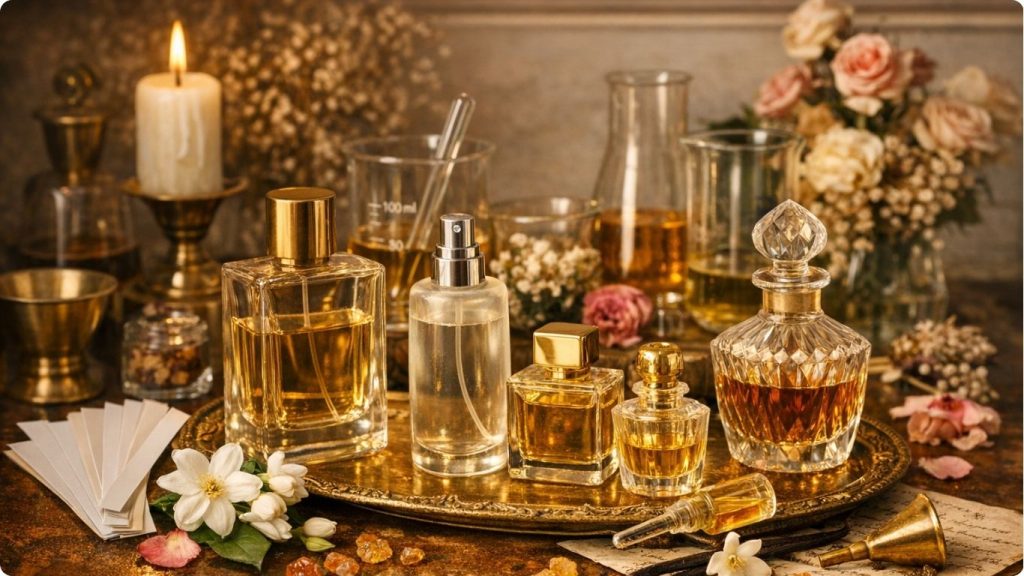
Concentration tells you how much aromatic material is diluted into alcohol, water, and sometimes oils. Higher concentration often means more depth and longer wear, but that does not automatically mean better performance for every person or every fragrance. The formula, ingredient profile, and your skin chemistry still shape the result.
What perfume concentration actually means
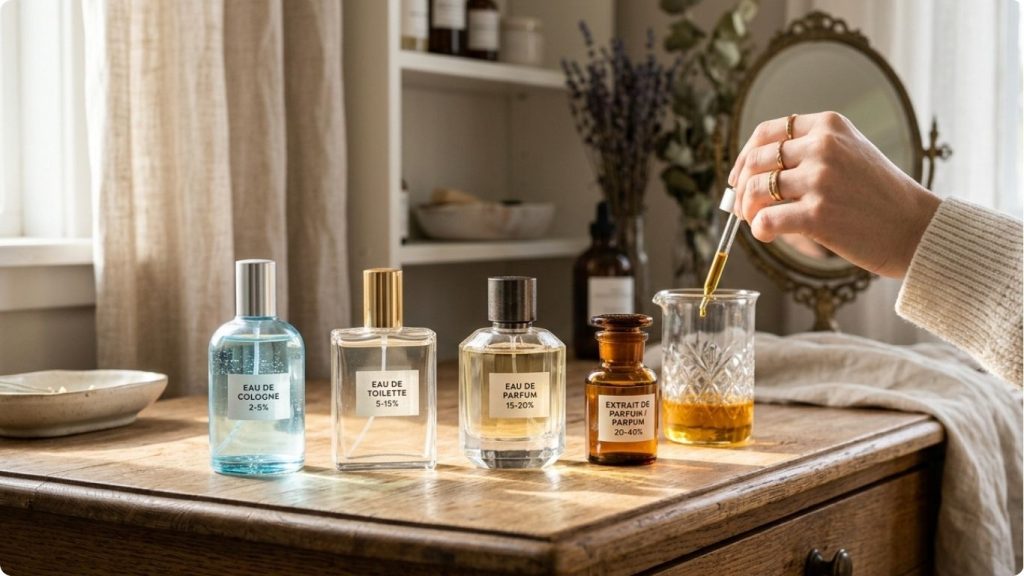
When you see terms like Eau de Toilette or Parfum, you are usually looking at concentration categories. In practical terms, these categories suggest how intense a fragrance may smell, how long it may last, and how it may project from the skin. They are best treated as guidelines, not promises.
A higher concentration usually contains more perfume oil, which can create a richer opening and a slower drydown. It may sit closer to the skin or last longer depending on the composition. A lower concentration often feels lighter, more sparkling, and easier to reapply, which can be an advantage in hot weather, office settings, or for people who get overwhelmed by dense scents.
Guide to perfume concentration types by category
Body mist and fragrance mist
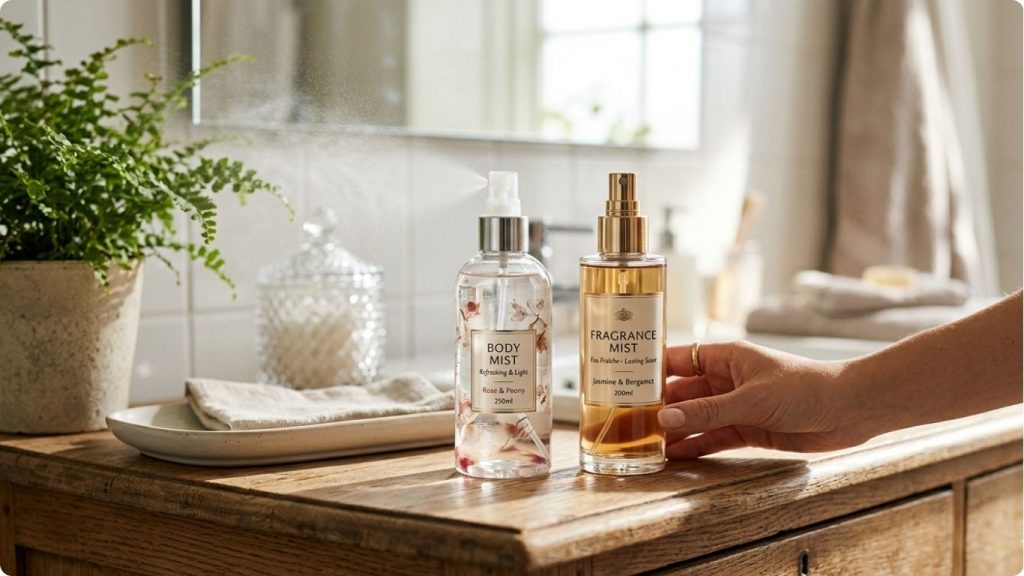
Body mists sit at the lightest end of the spectrum. They usually have a low fragrance concentration and are built for a casual, quick-refresh experience rather than all-day performance. Expect a softer scent cloud and short wear time, often a couple of hours or less.
This category works best when you want low commitment. After the gym, before bed, or in very warm climates, a mist can feel more comfortable than a heavier perfume. The trade-off is simple: low intensity, low longevity.
Eau de Cologne
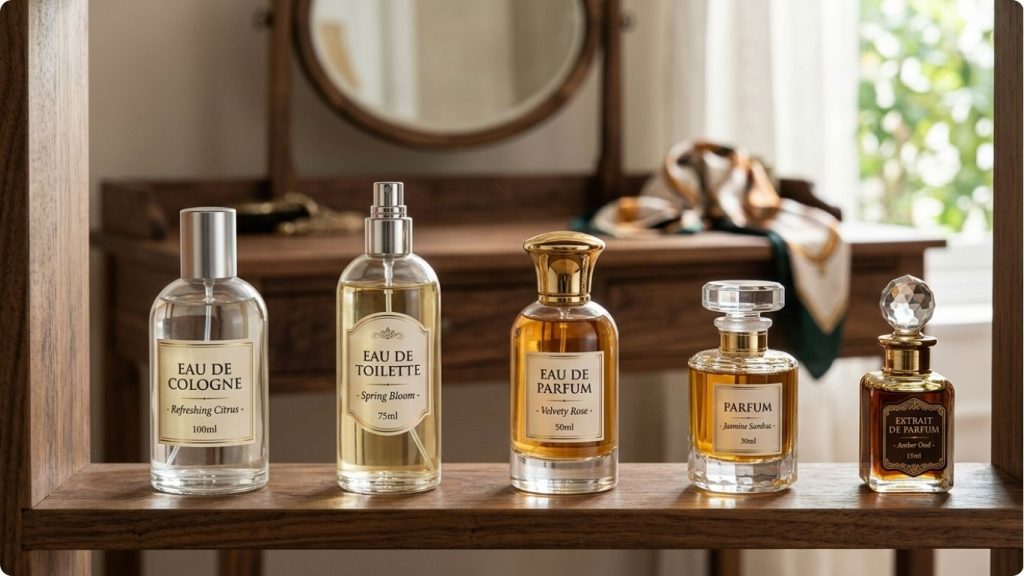
Eau de Cologne traditionally has a light concentration, often built around bright citrus, herbs, and aromatic notes. It tends to open fast, feel refreshing, and fade sooner than stronger formats. Many classic colognes are designed around that brief, uplifting effect.
If your skin tends to amplify perfume, Eau de Cologne can be a smart choice. On dry skin, though, it may disappear quickly unless you moisturize first or plan to reapply.
Eau de Toilette
Eau de Toilette, or EDT, is one of the most common concentrations on the market. It often balances freshness with enough structure to last through several hours of wear. For many people, this is the easiest category to wear daily because it gives noticeable scent without always becoming dense or heavy.
EDTs often emphasize top and mid notes. That means you may get a brighter, more energetic version of a scent profile compared with its Eau de Parfum counterpart. If you want something versatile for work, errands, and everyday wear, EDT is often the safest place to start.
Eau de Parfum
Eau de Parfum, or EDP, usually has a higher concentration than EDT and often delivers stronger presence and longer wear. It may also reveal more of the base notes, which can make the fragrance feel smoother, warmer, or more textured on skin.
That said, more concentration can mean more sweetness, more woodiness, or more density depending on the formula. If you liked the airy freshness of an EDT, the EDP version may not feel like a simple upgrade. Sometimes it is richer in a way you want. Sometimes it changes the personality of the scent.
Parfum or Extrait de Parfum
Parfum, also called Extrait de Parfum, generally sits near the highest end of concentration. These formulas often wear closer to the skin than expected, but they can last a long time because they evaporate more slowly. Instead of shouting, many parfums create a controlled, persistent aura.
This category can work beautifully for cooler weather, evening wear, or anyone who values depth over brightness. But it is not automatically the best value for every situation. If you prefer strong projection in the first hour, some parfums may actually feel too restrained.
How concentration affects longevity and projection
Longevity and projection are related, but they are not the same. Longevity is how long a fragrance remains detectable. Projection is how far it radiates from the skin. A fragrance can last a long time and still project softly. It can also project strongly at first and vanish sooner than expected.
Concentration influences both, but composition matters just as much. Citrus-heavy fragrances tend to burn off faster, even in stronger concentrations. Dense notes like vanilla, amber, patchouli, musk, and resins often linger longer, even when the overall concentration is moderate.
This is why comparing concentration labels across different fragrances can mislead you. An EDT built around woods and musks may outlast an EDP built around citrus and transparent florals. The label gives you a clue, not the full performance story.
Skin chemistry changes the outcome
This is where many buying mistakes happen. Two people can wear the same Eau de Parfum and get very different results. Oily skin often holds fragrance longer because it gives scent molecules more to cling to. Dry skin usually lets fragrance evaporate faster, which can make lighter concentrations feel especially short-lived.
Skin temperature also matters. Warmer skin can push a fragrance outward faster, increasing projection but sometimes shortening the life of delicate notes. pH is often discussed in fragrance circles, but in day-to-day wear, oil level, hydration, body heat, and application method usually have a more visible effect.
If fragrances routinely disappear on you, concentration matters, but prep matters too. Apply to moisturized skin, target pulse points without over-rubbing, and test performance over a full day before deciding a formula is weak.
Which concentration should you choose?
The best concentration depends on how you want the fragrance to behave. If you want an easy daytime scent that will not dominate a room, an EDT may be ideal. If you want fewer reapplications and more depth into the drydown, an EDP is often the better match. If you want subtle luxury, close-wearing persistence, or evening richness, parfum may make sense.
Climate and setting matter just as much. In hot, humid weather, lower or mid-level concentrations often feel cleaner and more comfortable. In cold weather, higher concentrations can cut through the air better and maintain presence. For office use, moderate projection is usually more useful than maximum concentration.
Budget is part of the equation too. A more concentrated fragrance costs more upfront, but if you only need one or two sprays, the bottle may last longer. On the other hand, if you prefer frequent reapplication and a lighter scent profile, paying extra for parfum may not improve your experience.
How to test concentration types the smart way
Do not judge concentration from the first spray alone. Test it on your skin, not just a paper strip, and give it several hours. Watch three things: how loud it starts, when it settles, and how long it stays recognizable without pressing your nose to your wrist.
It also helps to compare concentrations side by side if a fragrance line offers them. An EDT and EDP version may share a name but wear very differently. One may be fresher and more transparent. The other may be sweeter, darker, or less airy. Choose the version that fits your use case, not the one with the stronger title.
If you are building a small fragrance wardrobe, think in roles. A lighter concentration can cover daytime, summer, and close settings. A stronger concentration can handle evening, colder months, and longer wear days. That approach usually delivers better value than chasing the highest concentration every time.
Common mistakes when reading concentration labels
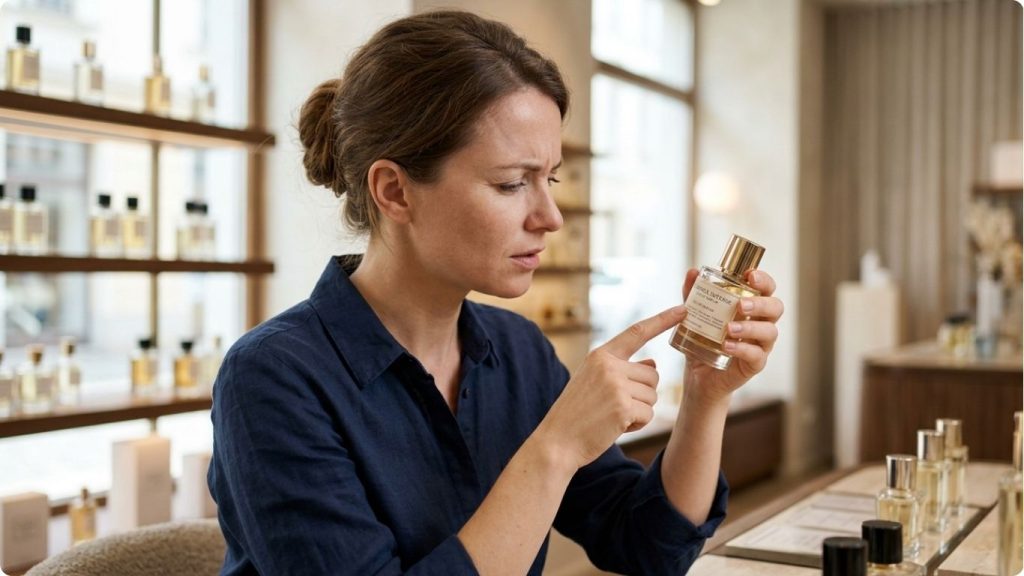
One mistake is assuming concentration equals quality. It does not. A well-made EDT can smell more balanced and perform better for your needs than a heavy EDP. Another mistake is assuming all brands use concentration terms with the same standards. They do not always. Marketing, regional conventions, and house style can all blur the categories.
It is also easy to overlook atomizer output. Some bottles spray a fine mist, while others deliver a heavier dose. That changes your perception of strength right away. Application count matters too. Three sprays of an EDT may outperform one spray of a parfum in real life.
If you want a more practical fragrance routine, use concentration labels as a starting point, then verify performance on your own skin. That is the most reliable way to choose a scent you will actually enjoy wearing.
The right concentration is the one that matches your skin, your setting, and your expectations. Once you start reading perfume through that lens, labels become less confusing and your choices get a lot more accurate.


Leave a Comment