
If you’ve ever tested a fragrance labeled oud on one wrist and amber on the other, you already know this is not a small difference. The oud vs amber perfume question matters because these two scent families can change not just how a fragrance smells, but how long it lasts, how far it projects, and how comfortable it feels on your skin over a full day.
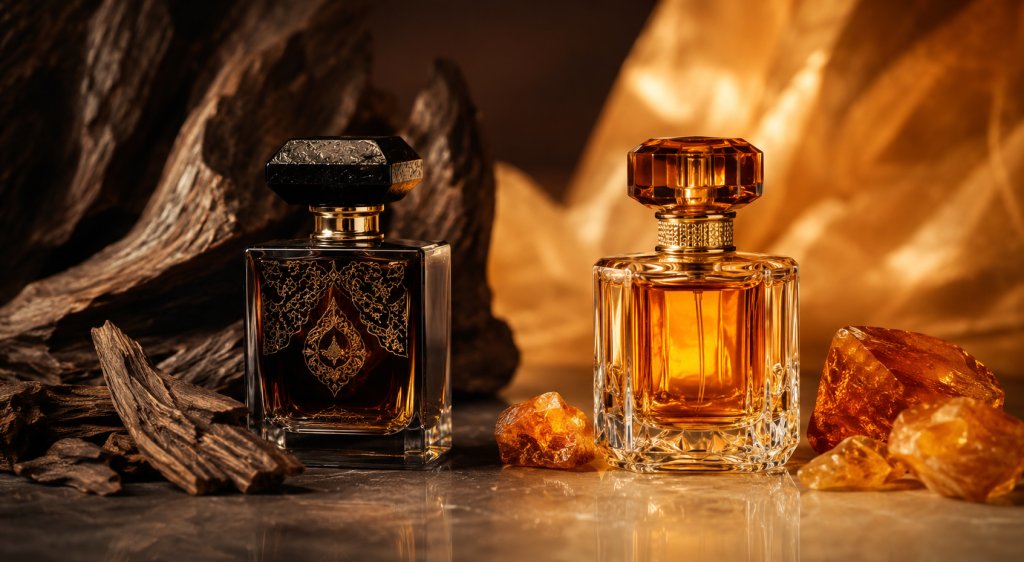
For most shoppers, the real issue is not which one is more luxurious or more popular. It is which one gives you the result you want. Do you want a scent that feels dark, dry, resinous, and assertive? Or something warmer, smoother, sweeter, and easier to wear across settings? Once you frame the decision around performance and wearability, choosing becomes much easier.
Oud vs amber perfume: the core difference
Oud and amber are often grouped together because both show up in rich, evening-leaning fragrances. On skin, though, they behave very differently.
Oud usually refers to an accord inspired by agarwood. In modern perfumery, especially at commercial price points, that often means a constructed oud effect rather than pure natural oud oil. The smell can range from woody and smoky to leathery, medicinal, animalic, or slightly sweet. Some oud perfumes are smooth and polished. Others are intentionally challenging.
Amber, by contrast, is usually an accord built around warmth. It often combines resins, vanilla, balsams, labdanum, and soft woods to create a glowing, rounded effect. Amber perfumes tend to feel more diffusive and comforting. They are often easier for beginners to understand because the sweetness and warmth read as familiar.
A simple way to think about it is this: oud creates tension, amber creates glow. That is not always true in every formula, but it is a reliable starting point.
Oud vs Amber Perfume: What Smells Better? (Detailed Comparison Table)
| Feature | Oud (Agarwood) | Amber (Amber Accord) |
|---|---|---|
| Definition | A rare, natural resin formed in Aquilaria trees when infected by a specific mold; known as “liquid gold” in perfumery | A blended fragrance accord (not a raw material) typically made from resins like labdanum, benzoin, and vanilla |
| Origin | Southeast Asia, especially Cambodia, Laos, India, and the Middle East | Concept originates from historical resin-based perfumes; modern amber is a constructed scent |
| Scent Profile | Rich, deep, woody, smoky, leathery, sometimes animalic and medicinal | Warm, sweet, resinous, slightly powdery, soft, vanillic and balsamic |
| Intensity | Very strong, bold, and complex | Moderate to strong, but smoother and more rounded |
| Longevity | Extremely long-lasting (often 8–24+ hours depending on concentration) | Long-lasting (typically 6–12 hours) |
| Projection (Sillage) | Heavy and noticeable; can dominate a room | Moderate to strong, but less overpowering than oud |
| Perception | Considered luxurious, sophisticated, and sometimes polarizing due to its intensity | Viewed as comforting, sensual, and universally pleasing |
| Complexity | Highly complex; evolves dramatically over time on skin | Smooth and linear compared to oud; evolves subtly |
| Gender Usage | Often used in unisex and traditionally masculine fragrances; popular in Middle Eastern perfumery | Widely used in both men’s and women’s fragrances |
| Typical Pairings | Rose, saffron, sandalwood, musk, spices | Vanilla, patchouli, tonka bean, musk, spices |
| Cultural Significance | Deep cultural importance in Middle Eastern and South Asian traditions; used in rituals and religious contexts | Popular in Western perfumery; associated with warmth and comfort rather than ritual use |
| Price Range | Very expensive (natural oud is one of the costliest perfume ingredients) | Generally affordable; synthetic blends reduce cost |
| Natural vs Synthetic | Natural oud is rare; many fragrances use synthetic oud accords | Almost always a synthetic or blended accord |
| Seasonal Preference | Best suited for fall and winter; also used for formal or evening occasions | Ideal for fall and winter; also works in cooler evenings year-round |
| Beginner Friendliness | Not beginner-friendly; can be overpowering and challenging | Very beginner-friendly; easy to like and versatile |
| Common Use Cases | Luxury perfumes, niche fragrances, traditional oils | Designer fragrances, gourmand and oriental perfumes |
| Allergenic Concerns | Generally safe but strong concentration may be overwhelming | Usually safe; depends on specific resin components |
| Overall Appeal | Appeals to fragrance enthusiasts who appreciate bold, complex, and exotic scents | Appeals to a broader audience seeking warmth, sweetness, and comfort |
How oud smells on skin
On blotter, oud can smell dramatic. On skin, it becomes more personal and much less predictable.
In a dry composition, oud may pull smoky, woody, and slightly bitter. On warmer skin, or when paired with rose, saffron, or vanilla, it can become smoother and more rounded. Some people get a clean pencil-shaving effect from modern oud accords. Others get a barnyard, medicinal, or rubbery impression, especially if the formula leans more animalic.
This is why blind buying oud-heavy perfumes is risky. The same fragrance can smell luxurious on one person and abrasive on another. Skin temperature, oil production, and the surrounding notes all shape the outcome. If your skin tends to amplify spice, smoke, or leather, oud may feel louder and sharper than expected.
The upside is performance. Many oud-led fragrances have strong persistence, especially in extrait, parfum, or oil-based styles. Even when projection settles, a woody-oud base can linger on skin and clothing for hours.
Which Smells Better? (Objective Insight)
| Preference Type | Better Choice | Why |
|---|---|---|
| Mass appeal / everyday wear | Amber | Softer, sweeter, widely liked |
| Luxury / statement scent | Oud | Rare, deep, and distinctive |
| Comforting / cozy fragrance | Amber | Warm and inviting profile |
| Bold, unique identity | Oud | Highly recognizable and complex |
| Beginner perfume users | Amber | Easier to wear and appreciate |
| Experienced fragrance collectors | Oud | Offers depth and evolution |
How amber smells on skin
Amber is generally more forgiving. It tends to warm up quickly and settle into a soft, enveloping trail.
Depending on the formula, amber can smell resinous, powdery, balsamic, sweet, musky, or slightly spicy. In many mainstream and niche fragrances, amber works as a smoothing material that rounds off sharper edges. It can make florals richer, woods creamier, and spices more wearable.
On dry skin, amber often performs better than lighter citrus or fresh florals because its resinous structure gives it more staying power. On naturally warm skin, amber can become almost edible if vanilla, benzoin, tonka, or labdanum are prominent. That can be beautiful in cold weather, but it may feel too heavy in heat if the formula is dense.
If you want a fragrance that feels inviting and easier to wear in mixed company, amber usually has the advantage. It is less polarizing than oud and more likely to get described as cozy, sensual, or elegant rather than intense.
Which lasts longer: oud or amber?
If your main concern is longevity, the answer depends on the construction, not just the label.
Oud fragrances often last longer because perfumers tend to build them on strong woody, resinous, and musky bases. But amber can also be excellent in longevity when it includes dense materials like labdanum, benzoin, patchouli, vanilla, and balsams. A light amber can underperform. A heavy amber oriental can easily outlast many oud fragrances.
What usually differs more is the shape of the wear. Oud tends to maintain a distinct woody identity deep into the drydown. Amber often becomes softer and more blended over time, even when it is still very much present on skin.
If you judge performance by noticeable character at hour eight, oud may win more often. If you judge performance by overall warmth still detectable at the end of the day, amber is highly competitive.
Sillage and projection: which one gets noticed more?
This is where people often make the wrong assumption. Oud does not automatically project more, and amber does not automatically sit closer to the skin.
An oud fragrance can be dense but relatively contained, especially if the formula is oily, resin-heavy, or built for intimate wear. Amber can throw surprisingly well if paired with sweet spices, vanilla, or modern amber woods. In designer-style compositions, amber often supports a broad, pleasing scent cloud. Oud more often creates a sharper signature bubble.
If you want compliments in social settings, amber is usually the safer choice. If you want definition, gravity, and a more distinctive scent identity, oud often stands out more. One is not better. It depends on whether you want ease or impact.
Oud vs amber perfume for different skin chemistry
Skin chemistry matters more with oud than with amber, but both react to body heat and oil levels.
On oily skin, oud can bloom fast and project strongly in the first hour. That can be excellent if the opening is smooth, but risky if the opening is medicinal or smoky. Amber on oily skin often gets richer and sweeter, sometimes to the point of feeling thick.
On dry skin, oud may lose some of its top-note drama but still cling in the base. Amber often feels beautiful at first and then fades sooner unless it is built on a stronger resin structure. Moisturized skin generally helps both, but especially amber, which benefits from a stable surface to hold onto.
Body temperature matters too. Warmer skin pushes both notes outward. Cooler skin tends to keep them more controlled. If perfumes disappear on you, a dense amber or oud-based fragrance may solve that problem. If fragrances already feel loud on your skin, test cautiously, because both categories can become overwhelming with over-application.
Which is easier to wear daily?
Amber wins for most people.
That is not because oud is better reserved for special occasions by rule. It is because amber is more adaptable across office settings, casual wear, travel, and close-contact environments. Its warmth reads as approachable. Oud asks more from the wearer and from the people around them.
A modern, cleaned-up oud can absolutely work during the day, especially when blended with citrus, lavender, rose, or soft musk. But if you want one category with fewer surprises, amber is the easier recommendation.
For beginners, amber is usually the smarter first step. For hobbyists who already know they enjoy smoky woods, leather, spice, or Middle Eastern scent structures, oud becomes much more rewarding.
When to choose oud and when to choose amber
Choose oud when you want structure, depth, and a fragrance that feels more architectural than cozy. It works especially well for evening wear, cold weather, formal settings, and moments when you want a scent with presence.
Choose amber when you want warmth without friction. It is ideal for date nights, cooler offices, daily wear, and gift buying because it is easier to like and easier to place.
There is also a middle ground. Many excellent fragrances combine oud and amber, using amber to soften oud’s rough edges or oud to give amber more backbone. If pure oud feels too intense and pure amber feels too sweet, this blended direction often delivers the best balance.
How to test oud and amber before you buy
Do not rely on the first five minutes. That is where both categories can mislead you.
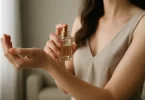
Test one oud fragrance on one wrist and one amber fragrance on the other. Wear them for at least six hours. Notice not only which smells better, but which remains pleasant as your skin warms up, which one creates the right projection for your environment, and which one you still want to smell on yourself later.
Pay attention to emotional comfort too. Some people admire oud more than they enjoy wearing it. Some enjoy amber at first but find it too sweet by hour four. Those are useful signals, not minor details. At PerfumeOnSkin, the goal is not to identify the most prestigious note. It is to find the one that performs the way you actually live.
If you want the sharper signature, choose oud. If you want the smoother companion, choose amber. And if your skin turns sweet scents heavy or woody scents harsh, trust that reaction early. The best fragrance category is the one that keeps working after the novelty wears off.
Leave a Comment