
Most perfume mistakes happen in the first five minutes. A fragrance smells great on a paper strip, gets sprayed on the wrist, then gets rubbed in, judged too quickly, and either bought or dismissed before it has any chance to show what it actually does on skin. If your goal is to choose a scent that works on you – not just in the air or in the bottle – your testing method matters.
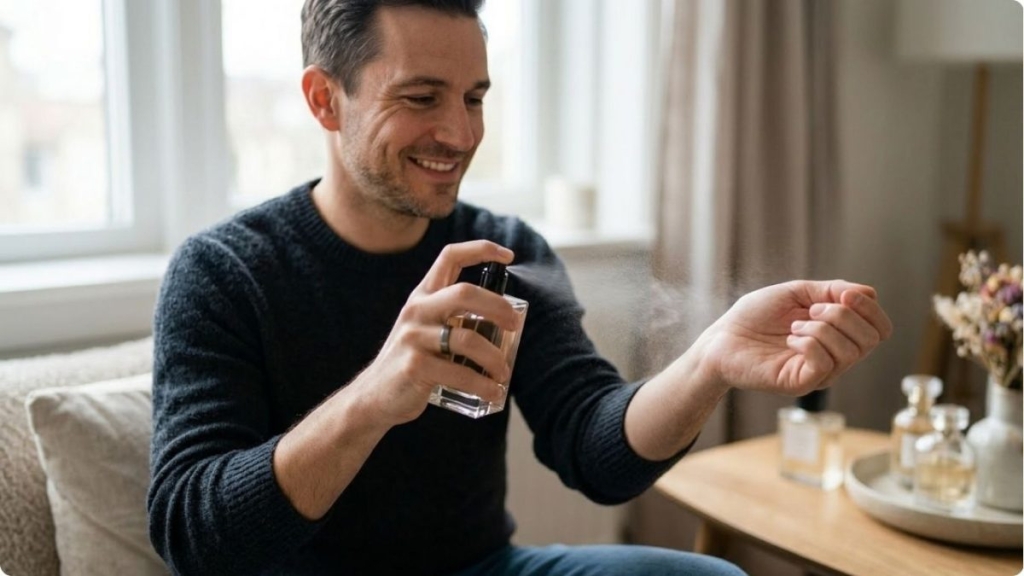
This is where many shoppers lose money. Perfume is not static. It changes with heat, oil levels, hydration, and time. Testing it correctly gives you a much clearer read on scent profile, longevity, and projection before you commit.
How to test perfume on skin the right way
If you want an accurate result, start with clean, product-free skin. Avoid heavily scented lotion, body wash residue, or another fragrance already on your pulse points. Those variables can distort the opening and make it harder to tell what the perfume itself is doing.
Spray once on one testing spot. Two sprays can be useful when you are wearing a fragrance normally, but for evaluation, one spray keeps the reading cleaner. The inner wrist and inner elbow are both useful. The wrist is easy to smell throughout the day, while the inner elbow often gives you a better sense of how a fragrance warms and diffuses over time.
Then let it sit. Do not rub your wrists together. Rubbing creates friction and heat, which can rush the opening and blur the transition into the heart notes. You are trying to observe the perfume, not force it to perform.
Give the first impression about 30 seconds to settle. Alcohol-heavy top notes can feel sharp at first, especially in fresh citrus, aromatic, or aldehydic fragrances. After that, smell from a short distance first, then closer. This helps you judge both the scent itself and how it lifts off skin.
Why skin testing beats paper strips
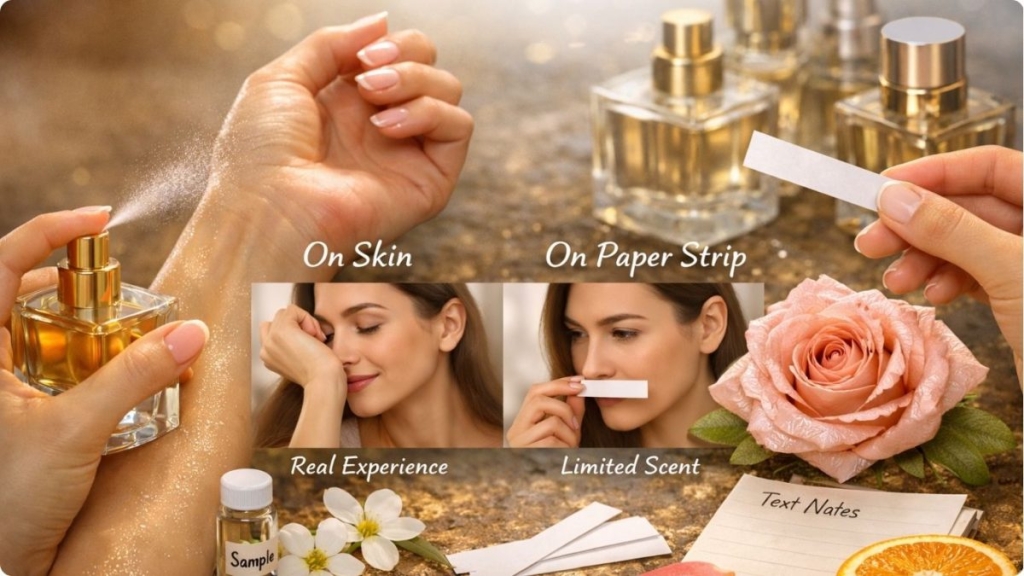
Blotters still have a role. They are useful when you need to narrow down ten fragrances to two or three. But a strip cannot tell you how a perfume reacts with your skin chemistry, how strongly it projects from your body, or whether it turns sweeter, sharper, soapier, or flatter after an hour.
Skin testing reveals development. A perfume that smells clean and airy on paper may become creamy, musky, or overly sweet on warm skin. Another that seems dense on the strip may open beautifully once your skin heat starts pushing different notes forward.
This is especially important if you care about performance. Longevity and sillage are not only formula issues. They are also wear issues. The same fragrance can wear softly on one person and loudly on another.
What to evaluate during the first hour
The first hour tells you more than most shoppers realize. This is when you should pay attention to three separate questions: Do you like the opening, do you like where it is going, and does the intensity feel right for how you plan to wear it?
In the first 5 to 10 minutes, focus on the opening. You are checking for immediate appeal, but also for anything that feels harsh, medicinal, too powdery, too sweet, or unexpectedly synthetic. Some openings are brief and worth tolerating. Others are warning signs that the fragrance may not suit your preferences.
At the 20 to 30 minute mark, the perfume usually starts moving into the heart. This is often the most wearable phase and the one that matters most if you care about daily use. Florals settle, woods become clearer, fruit notes soften, and spices may either round out or become more obvious. If you only judge at first spray, you miss the phase you will actually live with.
By 60 minutes, you should have a good early read on balance and direction. Ask whether the fragrance is becoming more complex or more monotonous. Some perfumes open beautifully and then collapse into a generic musky base. Others start quietly and become much better after time on skin.
Best Jean Paul Gaultier Perfumes for Men and Women – Top Picks for 2026
| Perfume Name | Gender | Fragrance Type | Key Notes | Features & Personality |
|---|---|---|---|---|
| Le Male Le Parfum | Men | Eau de Parfum Intense | Cardamom, Lavender, Vanilla, Woods | Warm, elegant, long-lasting; perfect for evenings and formal wear |
| Le Male Elixir | Men | Parfum | Mint, Lavender, Benzoin, Tobacco | Rich, sensual, modern; ideal for date nights and cooler weather |
| Le Beau EDP Intense | Men | Eau de Parfum Intense | Coconut, Tonka Bean, Woods | Seductive, tropical, addictive; great for daytime or resort settings |
| La Belle EDP | Women | Eau de Parfum | Pear, Vanilla, Vetiver | Bold, feminine, sweet; excellent for romantic evenings |
| Classique EDT | Women | Eau de Toilette | Rose, Orange Blossom, Vanilla | Timeless, elegant, powdery; ideal for everyday |
| Scandal EDP | Women | Eau de Parfum | Honey, Blood Orange, Patchouli | Daring, provocative, loud; perfect for nights out and parties |
How to test perfume on skin for longevity and projection
If you are testing for performance, you need more than a quick smell at the counter. Wear the fragrance for at least four to six hours when possible. Eight hours is better if it is an eau de parfum, extrait, or anything marketed as long-lasting.
Check in at intervals instead of smelling constantly. A good rhythm is around 15 minutes, 1 hour, 3 hours, and 6 hours. Smelling too often can fatigue your nose and make the fragrance seem weaker than it is.
To assess projection, do not keep pressing your nose directly onto skin. Smell at a natural distance first. Then move your arm while walking or reach for something and notice whether you catch the scent in the air. That is much closer to real-world wear than repeated close sniffing.
For longevity, note when the fragrance shifts from projecting to sitting close to the skin, and when it becomes difficult to detect without direct contact. Those are two different stages. A perfume can stop projecting after two hours but still remain on skin for six.
If you want a cleaner comparison, test one fragrance on each arm on separate days under similar conditions. Weather, hydration, and even stress can shift how strongly a scent wears.
| Step | What to Do | Why It Matters | Expert Tip |
|---|---|---|---|
| Start With Clean Skin | Test perfume on freshly washed skin without lotion or other fragrances. | Oils, soaps, or previous scents can alter how the fragrance smells. | Use unscented moisturizer only if skin is very dry. |
| Spray on Pulse Points | Apply perfume to pulse areas like the inner wrist, neck, or inner elbow. | These warm areas help the fragrance diffuse and develop naturally. | The inner wrist is the most common testing spot. |
| Spray From the Right Distance | Hold the bottle 5–7 inches (12–18 cm) from the skin. | Proper distance creates an even mist and prevents over-application. | One spray is usually enough for testing. |
| Do NOT Rub the Fragrance | Let the perfume dry naturally on the skin. | Rubbing breaks down top notes and distorts the fragrance structure. | This is one of the most common perfume mistakes. |
| Wait for the Dry Down | Allow 20–30 minutes to experience the fragrance evolution. | Perfumes develop in three stages: top notes, heart notes, and base notes. | The true scent appears during the dry-down phase. |
| Test Only 2–3 Perfumes at Once | Avoid testing too many fragrances at the same time. | Your nose becomes overwhelmed (olfactory fatigue). | Perfume experts recommend maximum three scents per session. |
| Smell at Intervals | Smell the fragrance again after 1 hour and 4–6 hours. | This shows the longevity and base note performance. | Long-lasting fragrances often reveal their best notes later. |
| Compare on Different Skin Areas | Try different perfumes on separate wrists or elbows. | Skin chemistry can make fragrances smell slightly different. | Label or remember where each fragrance is applied. |
Common testing mistakes that give bad results
The biggest mistake is testing too many fragrances at once. After three or four, your nose starts blending impressions together. Everything becomes vaguely woody, sweet, fresh, or powdery. If you are in a store, use strips to edit down first, then put only one or two on skin.
Another common problem is testing on dry or irritated skin. Very dry skin can make some perfumes disappear faster and can flatten the development. If your skin is unusually dry that day, your wear test may understate the fragrance’s true performance.
People also tend to judge a scent too fast because they are chasing the opening. That makes sense with body spray or scented mist, but not with structured perfume. Dry-down matters. Base notes matter. The version you smell three hours later is often the version everyone around you experiences most.
And yes, rubbing the perfume after spraying is still one of the easiest ways to get a distorted read. It will not always ruin a fragrance, but it can shorten the most nuanced part of the opening.
Where to spray when testing
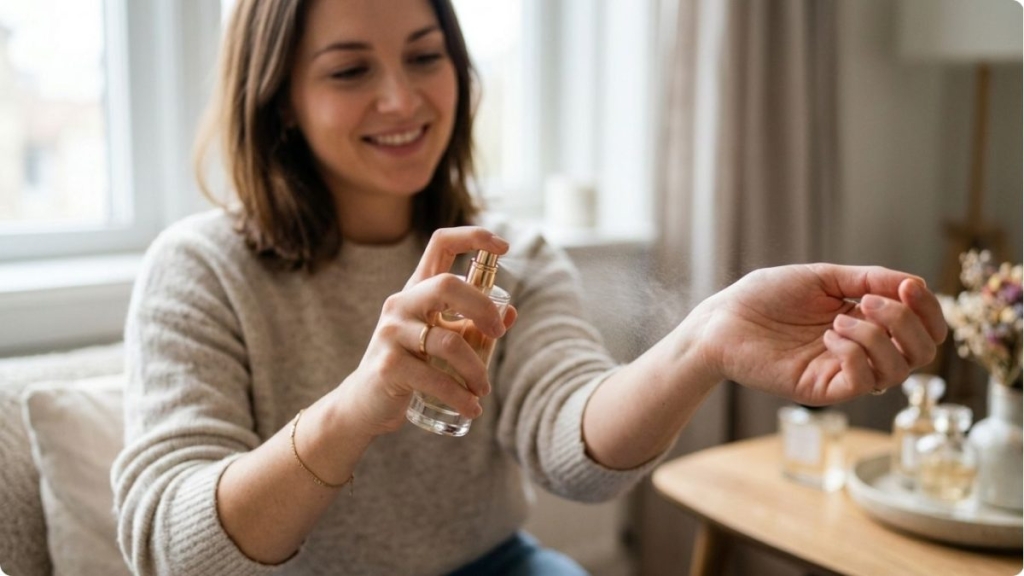
The best test spot depends on what you want to learn.
The wrist is practical for frequent check-ins. It is easy to access and useful in a store setting. The downside is that it gets washed, moved, and exposed more than other areas.
The inner elbow is one of the best places for a serious wear test. It stays relatively undisturbed, warms nicely, and often gives a more stable sense of development. If you are comparing longevity, this spot is often more reliable than the wrist.
If you want to understand projection in a more realistic way, the side of the neck can help, but only if you are testing one fragrance at a time. It is not ideal for side-by-side comparisons because the scent cloud is harder to isolate.
How many perfumes should you test in one session?
For skin testing, two is the practical maximum for most people. One on each arm keeps the comparison manageable. Beyond that, the overlap becomes confusing, especially if both fragrances share musk, amber, vanilla, woods, or white florals.
If you are still in the narrowing-down phase, use paper strips first and write the names down immediately. Then promote your top one or two to skin. This simple filter gives you a far better chance of remembering what each fragrance actually did.
When to retest before buying
A single good wear is helpful. Two wears are better, especially for expensive bottles, strong perfumes, or fragrances that feel unusual at first. Some scents grow on you once you understand their dry-down. Others impress on day one and become tiring by the second wear.
Retest if the weather changes, if you sampled in a rushed store environment, or if your skin was very dry, recently moisturized, or already carrying another scent. If a fragrance is borderline, a second test often tells you whether the issue is the perfume or the conditions.
This is also where a practical testing journal helps. Write down opening, one-hour impression, dry-down, projection, and total wear time. You do not need formal perfume language. You need enough detail to compare results honestly.
If you want better fragrance decisions, treat testing like observation rather than impulse. Spray lightly, give the perfume time, and let your skin tell you what the bottle cannot. That small shift is usually the difference between a scent you admire briefly and one you actually want to wear.

Leave a Comment