
You spray a perfume in the morning, love it for an hour, and by lunch it feels like it disappeared. Meanwhile, the same scent lasts all day on someone else. That gap is one of the biggest reasons people ask whether perfume performance is about the fragrance itself or the person wearing it.
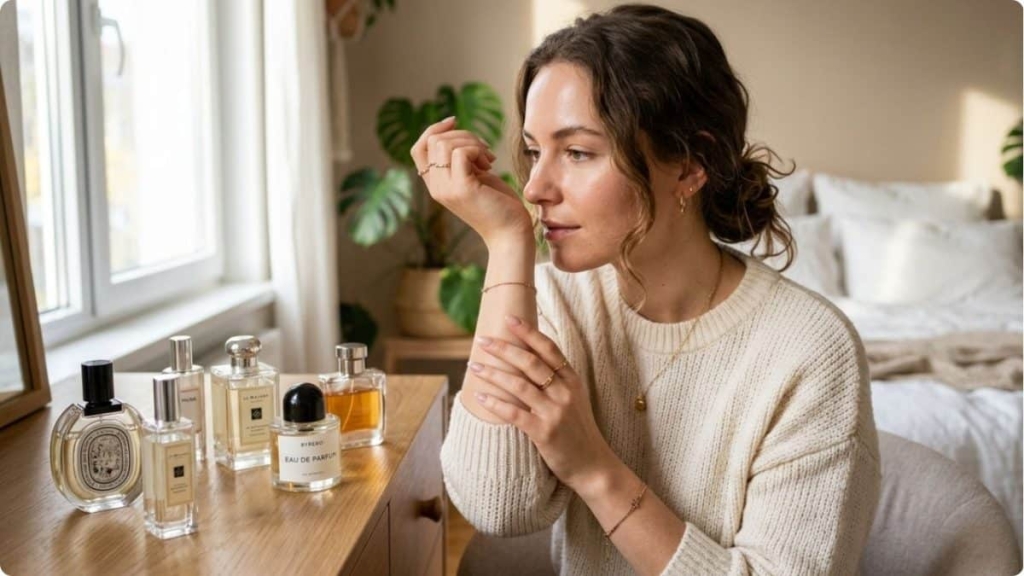
The short answer is yes – skin type affects perfume longevity. But not in a simplistic dry-skin-bad, oily-skin-good way. Wear time depends on how your skin holds moisture, how much oil it produces, your body temperature, where you apply the fragrance, and the perfume’s own formula. If you want better performance, the useful question is not just whether skin type matters. It is how it matters for your skin and what you can do about it.
Does skin type affect perfume longevity?
In practical terms, yes. Skin acts as the surface where perfume evaporates, diffuses, and develops over time. If that surface is very dry, fragrance molecules often evaporate faster and can smell thinner or fade sooner. If skin has more natural oil, it can hold onto some aromatic compounds longer, which often improves wear time.
That said, skin type is only one variable. A light citrus eau de cologne on oily skin may still vanish faster than a dense amber extrait on dry skin. Formula strength, raw materials, climate, and application style all shape the result. Skin type influences longevity, but it does not override the construction of the perfume.
Why perfume lasts differently on different skin
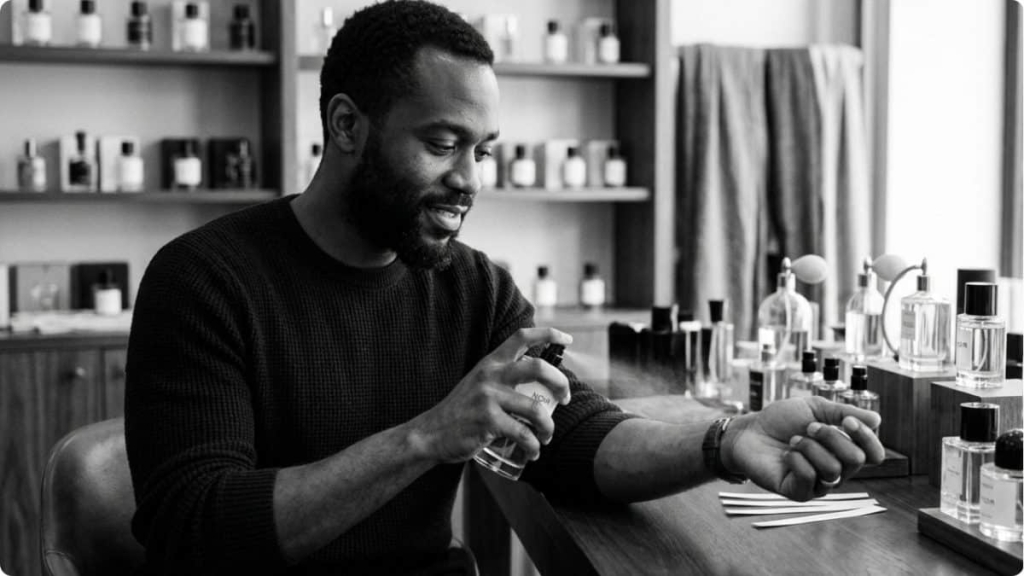
Perfume does not simply sit on top of skin unchanged. As alcohol evaporates, fragrance materials are released at different rates. Heat speeds this process up. Moisture and oil affect how evenly the scent spreads and how long aromatic compounds remain noticeable.
Dry skin tends to have less surface oil and often less water retention in the outer layer. That can make perfume burn off more quickly, especially fresh top notes such as citrus, green notes, and delicate florals. On dry skin, fragrances may feel vivid at first and then drop off sharply.
How Does Skin Type Affect Perfume Longevity?
| Skin Type | How It Affects Perfume Longevity | Why This Happens | Tips to Make Perfume Last Longer |
|---|---|---|---|
| Oily Skin | Longest wear time | Natural oils hold fragrance molecules better | Apply lightly; fragrance may project more |
| Normal Skin | Moderate to long wear | Balanced oil and moisture levels | Apply on pulse points for steady diffusion |
| Dry Skin | Shorter wear time | Lack of oils causes faster fragrance evaporation | Moisturize first with unscented lotion |
| Sensitive Skin | Variable wear | Reactions may limit where you apply | Test first; apply to clothing if needed |
| High pH Skin | Faster scent breakdown | Higher pH alters fragrance composition | Choose stronger concentrations (EDP/Parfum) |
| Low pH Skin | More stable longevity | Acidic skin preserves notes better | Opt for delicate or fresh fragrances |
Oily skin usually gives perfume more to cling to. This can extend the life of richer notes like woods, resins, musk, vanilla, and patchouli. Sometimes it also boosts projection, particularly in the first few hours. The trade-off is that certain perfumes can feel louder, sweeter, or heavier than expected.
Combination skin falls somewhere in the middle, and that is where many people get inconsistent results. A scent may perform well on warmer, oilier pulse points but fade quickly on drier areas like the forearms.
Dry skin and faster evaporation
If your skin often feels tight after washing or needs lotion to stay comfortable, dryness may be shortening your perfume wear time. Fragrance generally lasts better on moisturized skin because hydrated skin gives the perfume a less absorbent, less volatile surface than parched skin.
This is one reason people think a perfume is weak when the formula is not actually the problem. The scent may be performing exactly as designed, but your skin is not helping it hold on.
Oily skin and stronger diffusion
Oilier skin often supports longer wear, but that does not automatically mean better balance. Some scents become denser or project more aggressively on warm, oily skin. If a perfume feels overpowering on you compared with a friend, skin oil and heat may be amplifying it.
This matters when choosing fragrance families. Gourmands, ambers, and sweet florals may last very well on oily skin, but they can also become more intense than intended if oversprayed.
Skin chemistry matters, but not always the way people think
People often use “skin chemistry” as a catch-all explanation for any perfume disappointment. It is real, but it is also often overstated. Your skin does influence how a fragrance smells and lasts, yet pH is not a magical reason a perfume turns bad or disappears.
What matters more day to day is the overall condition of your skin, your natural oil level, your sweat rate, and your body heat. Hotter skin can make a fragrance bloom faster, which often improves initial projection but may reduce total wear time. Sweating can also disrupt the fragrance film on skin, especially in summer or during active days.
That is why one person can get six calm, steady hours from a woody scent while another gets a big first hour and little else. The perfume is the same. The evaporation pattern is not.
Best Perfumes by Skin Type: Long‑Lasting Scents for Men & Women
| Brand | Perfume | For | Best Skin Type | Why It Works Well | Typical Longevity |
|---|---|---|---|---|---|
| Dolce & Gabbana | The One EDP | Men | Dry / Normal | Rich amber & vanilla base helps compensate for lack of skin oils | 7–9 hours |
| Dolce & Gabbana | Light Blue Intense | Men | Oily / Normal | Stronger concentration improves hold on warm, oily skin | 6–8 hours |
| Dolce & Gabbana | Pour Homme | Men | Normal | Aromatic woods balance projection without fading quickly | 5–7 hours |
| Calvin Klein | Euphoria EDP | Women | Dry / Normal | Deep amber & floral notes slow evaporation on dry skin | 6–8 hours |
| Calvin Klein | Obsession | Men | Oily | Heavy oriental base thrives on naturally oily skin | 8–12 hours |
| Giorgio Armani | Sì EDP | Women | Normal / Dry | Chypre‑vanilla structure benefits from moisturized skin | 7–9 hours |
| Giorgio Armani | Acqua di Giò Profondo | Men | Oily / Normal | Aromatic marine accords bind well to skin oils | 7–10 hours |
Note: Longevity may vary depending on skin chemistry, climate, and application method.
The perfume itself still sets the ceiling
If you are trying to figure out whether your skin or your perfume is the issue, look at the fragrance structure. Fresh citrus, aquatic, and many green scents are naturally more volatile. They usually fade faster regardless of skin type. Dense orientals, woods, leather, and resin-heavy compositions typically last longer on most people.
Concentration matters too, but only up to a point. An eau de parfum often outlasts an eau de toilette, but raw materials and composition matter more than the label alone. A well-built eau de toilette can outperform a soft eau de parfum.
This is where realistic expectations help. Skin type can improve or reduce performance, but it cannot turn a light neroli cologne into a 12-hour powerhouse.
How to tell if your skin is affecting fragrance wear
A simple wear test gives you better answers than guessing. Apply the same perfume to bare, unmoisturized skin one day and to well-moisturized skin the next. Use the same number of sprays, same placement, and similar weather conditions. If the moisturized test clearly lasts longer, your skin condition is likely a major factor.
You can also compare skin versus fabric. Spray once on your wrist and once on the inside of a shirt or jacket lining from a safe distance. If the scent survives much longer on fabric, fast evaporation on skin is probably reducing wear time. That does not mean you should always spray clothes without caution, since some perfumes can stain. It simply helps isolate the variable.
How to make perfume last longer on your skin type
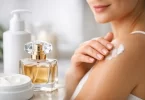
If your skin runs dry, the most effective fix is to moisturize before application. Use an unscented lotion or cream and let it settle before spraying. This creates a better surface for the fragrance and often extends wear without changing the scent too much.
If your skin is oily, you may not need as much help with retention, but placement matters. Start with fewer sprays and avoid applying too heavily to very warm areas if the fragrance tends to go loud on you. Chest, forearms, or the back of the neck may produce a more controlled result than stacking multiple sprays on the wrists.
For any skin type, applying perfume right after a shower can help if your skin is clean and lightly moisturized. Fragrance generally performs better on prepared skin than on skin that is dehydrated or coated in strongly scented body products.
Layering also helps, but it should be strategic. Matching body lotion, if available, can reinforce the perfume. An unscented moisturizer works just as well for many people and gives you more flexibility across your collection.
Best application habits for longer wear
Spray, do not rub. Rubbing creates friction and heat, which can disrupt the opening and push the fragrance to evaporate faster. It will not ruin every perfume, but it rarely improves performance.
Use pulse points selectively. Wrists and neck are popular because they are warm, but more heat is not always better. If a scent burns off quickly on warm skin, test cooler areas such as the forearms or even the torso under clothing.
Do not judge longevity only by what you smell on yourself after two hours. Nose fatigue is common, especially with musks, woods, and ambers. Ask someone you trust or test whether the scent is still present on clothing or skin before deciding it disappeared.
Does skin type affect perfume longevity enough to change what you buy?
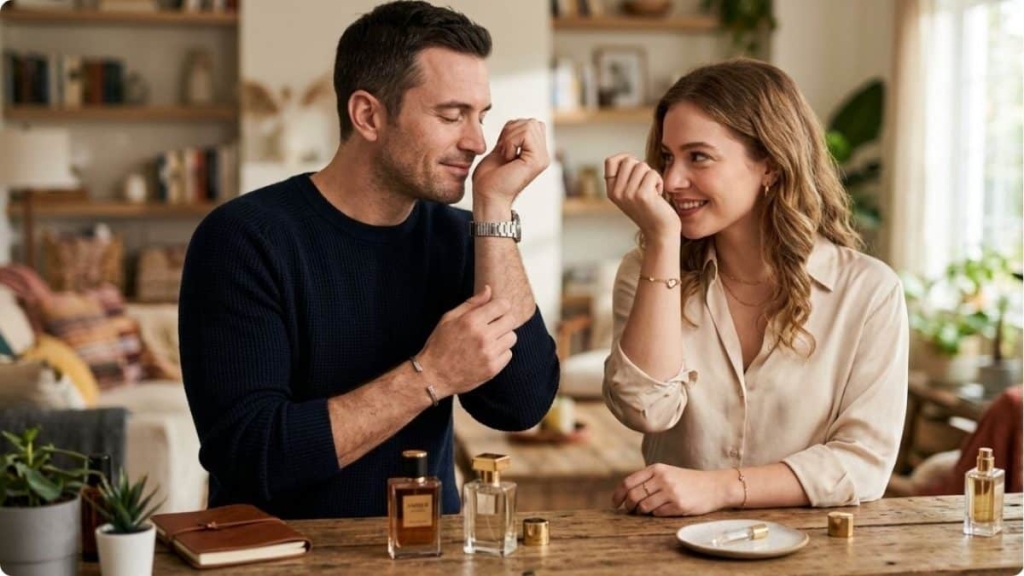
Sometimes, yes. If you consistently have dry skin and prefer very fresh fragrance families, you may be happier choosing perfumes with stronger base notes or better overall concentration rather than trying to force weak performers to last. If your skin is oily and amplifies sweetness, you may prefer compositions with cleaner woods, aromatics, or a drier finish.
This does not mean your skin limits your taste. It means performance should be part of your selection process. At PerfumeOnSkin, that is the practical lens that matters most: not whether a scent smells good in the air, but whether it performs well on you in real life.
The best fragrance is not the one with the loudest reputation for longevity. It is the one whose formula, concentration, and note profile work with your skin well enough that wearing it feels easy instead of high-maintenance.
If a perfume keeps disappearing on you, treat that as useful data, not a personal failure. Your skin is giving you information, and once you learn how it behaves, better fragrance choices get much easier.

Leave a Comment