
A perfume that disappears before lunch can feel like a bad buy. A perfume that still clings to your sweater the next morning can feel impressive – until you realize fabric and skin tell very different stories. If you are trying to figure out what “normal” wear time looks like, the answer is less about a single number and more about where the fragrance sits on your skin, what it is made of, and how you are wearing it.
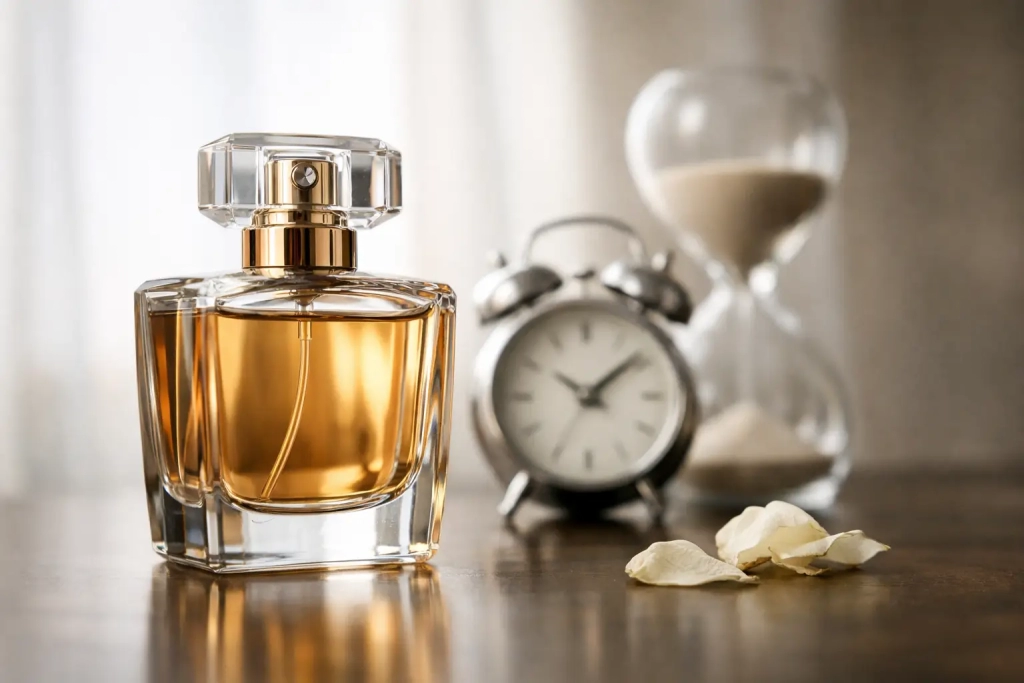
How long should perfume last on skin?
For most fragrances, a realistic benchmark on skin is 4 to 8 hours. That range covers a lot of what most people wear day to day, especially eau de parfum and many eau de toilette formulas. Lighter citrus, green, and aquatic scents often fade sooner, sometimes within 2 to 4 hours. Richer amber, woody, gourmand, and resin-heavy perfumes can stay noticeable for 8 hours or more.
That does not mean every part of the perfume lasts equally long. The bright opening usually fades first. What remains after a few hours is the heart and base – the materials responsible for the scent trail that sits closer to the skin. Many people think a perfume is “gone” when the top notes disappear, but if you smell your wrist or collarbone, the fragrance may still be there in a softer form.
This is where expectations often get distorted. Social media and marketing copy can make it sound like every good perfume should project all day. In practice, long-lasting and loudly projecting are not the same thing. A fragrance can last 10 hours but become a skin scent after 3. Another might project strongly for 90 minutes and then vanish.
What a good longevity range looks like
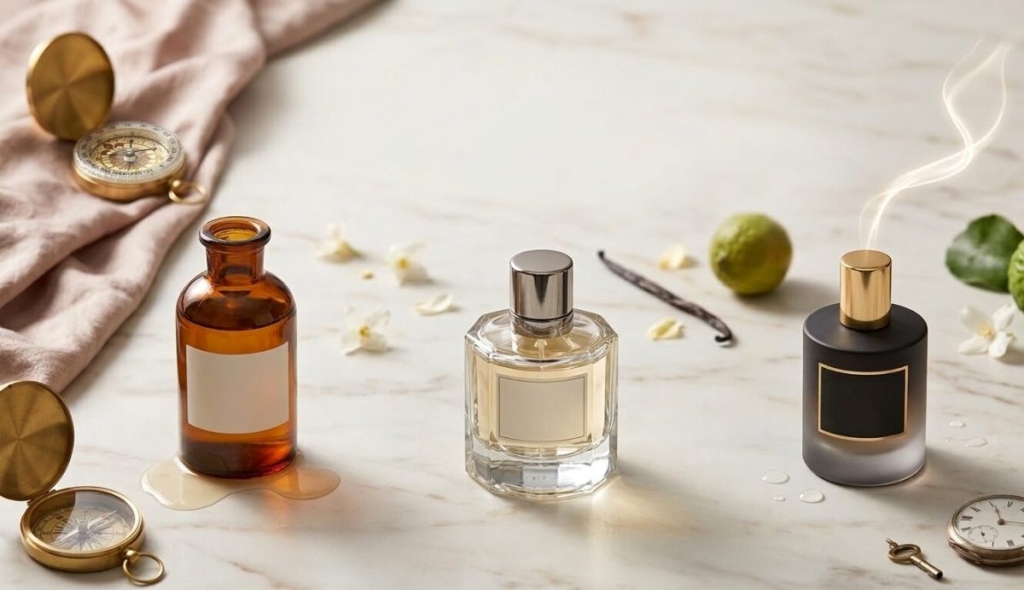
If you want a practical way to judge performance, separate longevity into tiers.
A poor performer on skin usually lasts under 3 hours. That can still be acceptable for a very fresh cologne-style scent, but for most mainstream perfumes it will feel short. Average longevity is around 4 to 6 hours, which is enough for a workday morning, dinner out, or regular errands. Strong longevity starts around 7 to 9 hours on skin. Exceptional longevity usually means 10+ hours, especially if the scent remains detectable without needing to press your nose directly to the skin.
The context matters. A sheer neroli splash that lasts 3 hours may be performing exactly as designed. A dense vanilla-oud composition that lasts 3 hours is usually underperforming.
Why the same perfume lasts longer on one person than another
Skin chemistry changes performance more than many shoppers expect. Oilier skin often holds fragrance longer because scent molecules have more to cling to. Drier skin tends to let perfume evaporate faster, which is why the same scent can seem richer and more persistent on one person and thin on another.
Body heat matters too. Warm skin can amplify projection early on, but it can also burn through the top and middle notes faster. That is one reason a perfume may smell stronger on you at first but not actually last longer.
Then there is environment. Heat, humidity, wind, indoor heating, and air conditioning all influence wear. A fragrance that performs well in mild weather may collapse in dry winter air or turn loud and fleeting in summer heat. Application style matters just as much. Two sprays on moisturized skin will behave differently from six sprays on dry forearms.
This is also why blind trust in reviews leads to disappointment. When someone says a scent lasted 12 hours on them, what they are really reporting is an interaction between formula, skin type, climate, spray count, and perception.
How long should perfume last by fragrance type?
Different scent families have different natural staying power. Fresh citrus and aromatic compositions are often the shortest-lived because the materials that create that sparkling effect are more volatile. Think bergamot, lemon, grapefruit, and airy marine notes. They smell crisp quickly, then soften quickly.
Florals vary. A light peony or muguet fragrance may wear close and fade earlier, while white florals, rose-oud blends, and tuberose-based perfumes can last much longer. Woods, vanilla, patchouli, amber, musk, leather, incense, and gourmand notes usually give a perfume more hold because these materials anchor the base.
Concentration helps, but only up to a point. Parfum generally lasts longer than eau de parfum, which often lasts longer than eau de toilette, but concentration does not guarantee performance. A minimalist parfum built around delicate notes can still wear shorter than a well-constructed eau de parfum with strong base materials.
How to tell whether your perfume is actually fading
One common mistake is assuming the fragrance is gone when your nose has simply adapted to it. Olfactory fatigue happens fast, especially with musks, ambers, and modern woody molecules. You stop noticing them because your brain filters them out, not because they vanished.
A better test is to ask a trusted person whether they can smell it at a normal distance, or check a less exposed area where you sprayed, like the upper chest. You can also revisit a scarf, sleeve cuff, or shirt collar. If the perfume is still present there but not on your wrist, your skin may be the issue rather than the fragrance itself.
Another useful distinction is projection versus residual scent. If you can only smell the perfume when your nose touches your skin, it is still lasting – it is just no longer projecting. That is not failure unless you specifically wanted a stronger scent trail.
How to make perfume last longer without overspraying
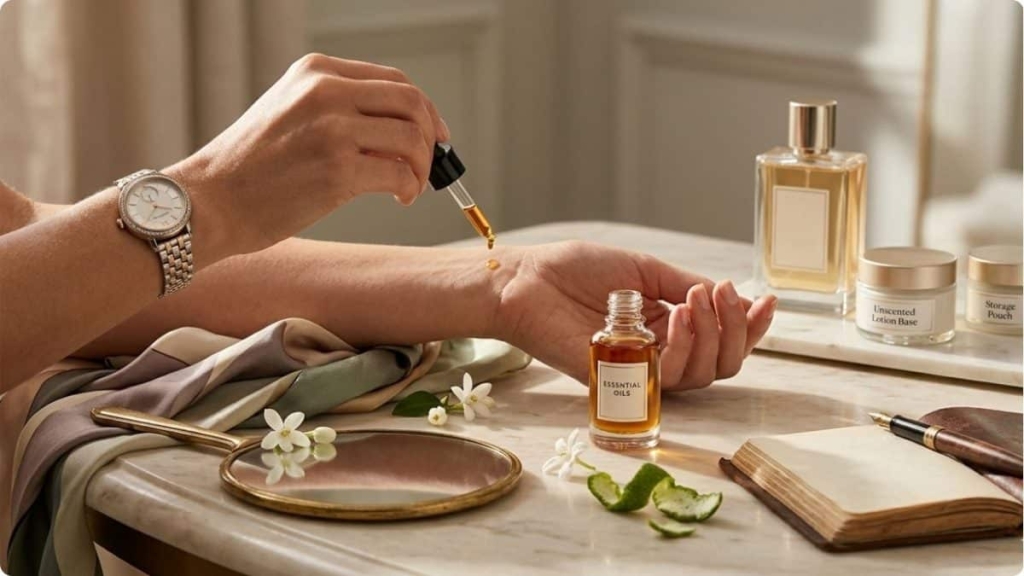
Start with skin prep. Perfume lasts better on moisturized skin than on dry skin, so applying an unscented lotion or cream before spraying can make a measurable difference. This is one of the most reliable longevity fixes because it addresses evaporation at the source.
Placement matters. Pulse points are useful, but they are not magic. Neck, chest, and inner elbows often hold scent better than the backs of hands, which get washed and exposed constantly. If you want longer wear, prioritize areas that stay relatively undisturbed.
Spray distance matters too. A close, direct spray deposits more fragrance than a mist through the air. And while rubbing wrists together is still common, it can disturb the opening and cause the fragrance to dry down faster or unevenly.
Clothing can extend the life of a scent significantly, but it changes the experience. Fabric often holds base notes longer than skin, yet it may mute development and can stain delicate materials. If you want a fragrance to survive a full day, one light spray on clothing plus skin is often more effective than adding extra skin sprays.
Layering helps when done with purpose. Using matching body products can reinforce the scent, but even a plain, unscented moisturizer improves performance. On PerfumeOnSkin.com, this skin-first approach is central for a reason: the perfume is not failing in a vacuum. It is performing through your skin, your routine, and your environment.
When short wear time is normal – and when it is a red flag
Not every perfume is supposed to last from breakfast to bedtime. Some are intentionally brief, bright, and refreshing. Cologne-style fragrances, many summer citruses, and certain clean musks are built for easy reapplication. If you love that style, carrying a travel spray is not a defeat – it is part of how the fragrance is meant to be worn.
A red flag is when a fragrance category known for depth consistently disappears far too fast, or when a new bottle performs dramatically worse than a sample under similar conditions. Reformulation, storage issues, counterfeit risk, and skin dryness can all play a role.
Storage is often overlooked. Heat, sunlight, and frequent temperature changes can degrade a perfume over time. If your bottle lives on a sunny bathroom shelf, poor performance may not be your imagination.
So, how long should perfume last for you?
The best benchmark is not the longest possible wear time. It is whether the perfume lasts long enough for the way you actually use it. For a gym-fresh citrus, 3 to 4 hours may be perfectly fine. For an office scent, you may want 5 to 7 hours with moderate projection. For evening wear, many people expect 8+ hours and a stronger base.
A smart standard is this: your perfume should give you a clear opening, a readable heart, and a base that remains detectable for the occasion you bought it for. If it vanishes before that point, it is underperforming for your needs, even if someone else calls it “average.”
The most useful way to judge fragrance is not by hype or by a single wear-time claim. Test it on your skin, in your climate, on a normal day, and pay attention to how it behaves at the 1-hour, 4-hour, and 8-hour marks. Once you know that pattern, you stop guessing and start choosing perfumes that actually fit your life.



Leave a Comment