
A perfume that disappears by lunch usually is not failing for just one reason. More often, it is a mix of formula, skin condition, application method, and environment. If you want to know how to make perfume last longer, the most effective approach is to fix the wear conditions first, then judge the fragrance.
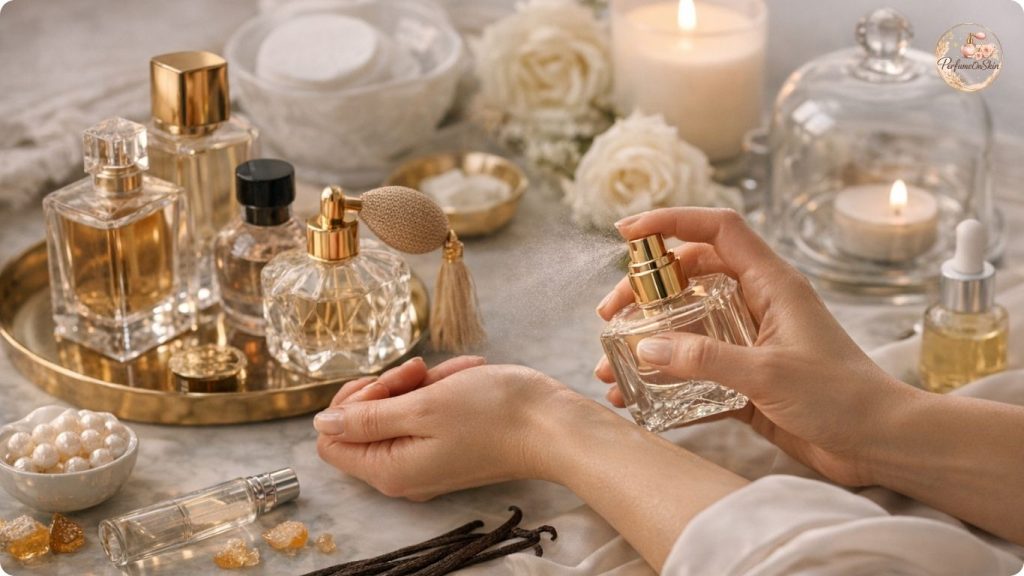
That matters because longevity is not only about buying a stronger scent. Some perfumes are built for airy freshness, while others are designed to linger for hours. The goal is to get the best possible performance from the fragrance you already own, on your skin, in your routine.
How to make perfume last longer on skin
Start with skin, because perfume performs best on a surface that is moisturized, calm, and not overly stripped. Dry skin tends to let fragrance evaporate faster, especially top notes like citrus, green notes, and light aromatics. If your skin often feels tight after showering, that alone can shorten wear time.
Apply an unscented moisturizer or body cream before spraying perfume. This creates a slightly more emollient surface that slows evaporation and gives scent molecules more to hold onto. Petroleum jelly can also work on pulse points, but it is best used lightly. Too much can flatten the fragrance or make application feel greasy.
Timing helps too. Apply fragrance shortly after a shower, once skin is dry but still well hydrated from your routine. Heat and moisture from the shower can leave skin more receptive, but wet skin can dilute or distort the opening. Dry first, then moisturize, then spray.
Body location changes results more than many people expect. Pulse points are useful because they radiate warmth, but warmth also speeds diffusion. If you want stronger projection for a shorter window, wrists and neck make sense. If you want longer, steadier wear, add fragrance to less exposed areas like the chest, collarbone, or the back of the neck. Clothing contact in these zones can also help the scent linger around you.
Your spray technique affects longevity
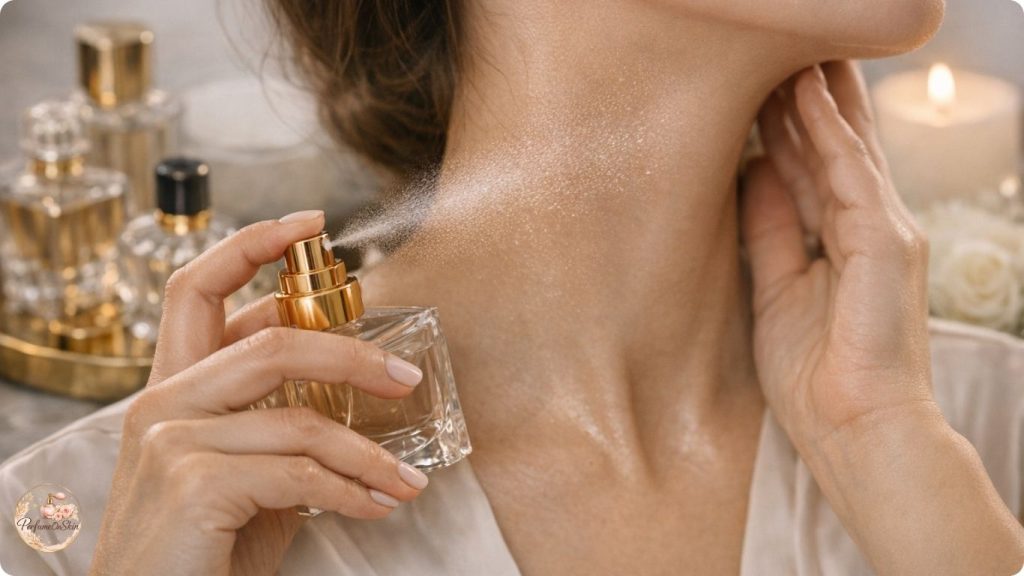
One of the biggest mistakes is under-applying very light fragrances and over-applying heavy ones. Eau de cologne, citrus-forward eau de toilette, and many skin scents often need more sprays to perform well. Dense amber, gourmand, oud, and patchouli-based perfumes may need far less because their base notes already have better staying power.
Spray from a normal distance so the perfume lands evenly rather than in a concentrated wet patch. A couple of targeted sprays usually outperform a vague fragrance cloud. The point is controlled placement, not waste.
Do not rub your wrists together after spraying. Rubbing creates friction and heat, which can disrupt the fragrance’s opening and speed up the evaporation of volatile notes. Let it dry on its own. This will not turn a weak perfume into a powerhouse, but it does preserve the intended development better.
If your fragrance fades quickly from skin, use strategic double placement. Apply once to moisturized skin and once to clothing, if the fabric is safe. This gives you both skin development and fabric retention. On many people, that combination noticeably extends wear time without needing a midday full reapplication.
Skin chemistry matters, but not in a mystical way
Skin chemistry gets blamed for everything, but the practical factors are usually oil level, skin hydration, body temperature, and how your skin interacts with certain materials. Oily skin often holds fragrance longer. Very dry skin often loses it faster. Warmer skin can throw scent more strongly, but sometimes for a shorter overall lifespan.
pH is discussed often, but in everyday wear, hydration and oil content usually have more visible effects. That is why two people can wear the same perfume and get different performance, even if the scent profile smells broadly similar.
This is also why testing on paper strips has limits. Blotters tell you the scent family and basic composition, but not the full performance story. If you are evaluating longevity, test on your own skin over several hours and in normal conditions. PerfumeOnSkin’s core idea is exactly this: performance is personal, and your skin is part of the formula once the fragrance is applied.
Some perfumes are supposed to fade faster
A fresh neroli cologne is not built like an extrait vanilla. Even with ideal application, lighter structures often have shorter wear because their most noticeable notes are more volatile. Citrus, herbal, marine, and many transparent floral perfumes tend to open beautifully and then sit closer to the skin.
That does not mean they are poor quality. It means the composition is doing what it was designed to do. If you love that style, focus on extending wear realistically rather than expecting all-day projection. Layering with matching or neutral body products, applying to clothing, and carrying a travel spray will usually serve you better than chasing a completely different scent profile.
Concentration matters, but it is not a guarantee. Eau de parfum often lasts longer than eau de toilette, yet raw materials and formula balance matter just as much. A bright eau de parfum can still wear lightly, while a resinous eau de toilette can outperform expectations.
Clothing, hair, and layering can help
Fabric often holds fragrance longer than skin because it is cooler and less reactive. A few sprays on a shirt, scarf, or jacket can extend the life of a perfume significantly. The caution is obvious: some formulas can stain delicate or pale fabrics, especially darker juices, oily formulas, or perfumes rich in resins and vanilla. Test first on an inconspicuous area.
Hair also holds scent well, but alcohol-heavy sprays can be drying if used directly and often. A better option is to mist a brush lightly and run it through the hair, or use a fragrance designed specifically for hair. This gives diffusion without as much direct drying.
Layering is another effective way to make perfume last longer, but it works best when done with a clear purpose. Start with an unscented moisturizer if you want to preserve the original scent. If you want extra depth and staying power, pair the perfume with a body oil or cream that supports the fragrance family. Vanilla, musk, amber, and soft woods are especially useful anchors because they tend to boost warmth and persistence.
The trade-off is balance. Over-layering can muddy the structure of the perfume or overpower the notes you liked in the first place. If the fragrance is delicate, keep the base neutral. If it is simple or linear, supportive layering can improve both depth and longevity.
Storage affects how long perfume performs
Poor storage does not just shorten shelf life. It can also weaken how a fragrance wears. Heat, sunlight, and repeated temperature swings can alter volatile materials and make the scent feel flatter or less stable.
Keep bottles in a cool, dry place away from direct light. A bedroom drawer or closed cabinet is usually better than a sunny bathroom shelf. Bathrooms are convenient, but frequent humidity and heat are not ideal for preserving fragrance quality.
Always close the bottle properly. Excess air exposure over time can contribute to oxidation, especially in partially used bottles. If a fragrance that once lasted well suddenly seems thin, storage may be part of the problem.
When reapplying is the smartest fix
Sometimes the answer is not technique. It is reapplication. If you are wearing a light summer fragrance in dry weather, expecting eight to ten hours of strong presence may not be realistic. A small travel atomizer can be more useful than forcing the perfume into a role it was never built to fill.
Reapplying also gives you control over intensity. A single refresh in the afternoon often works better than overspraying in the morning and hoping it lasts. This is especially true in offices, cars, and close indoor settings where projection needs to stay moderate.
If a perfume fades quickly every single time, even after moisturizing, targeted spraying, fabric support, and proper storage, then the formula may simply have limited longevity on you. That is useful information, not user failure. It tells you what kinds of notes, concentrations, and structures your skin wears best.
The best long-term strategy is to treat perfume longevity like fit, not hype. When you match the fragrance to your skin, your habits, and the kind of wear you actually want, lasting power gets much easier to predict.
Leave a Comment