
Most office fragrance mistakes are not about smell. They are about distance.
A perfume can be beautiful on skin and still be wrong for a shared workspace if it reaches other people before you do. That is why the real target for workwear is not just a clean or “professional” scent. It is controlled projection. If you are looking for a perfume for office low sillage, you want something that stays close, wears neatly through meetings, and does not turn your desk into the fragrance center of the floor.
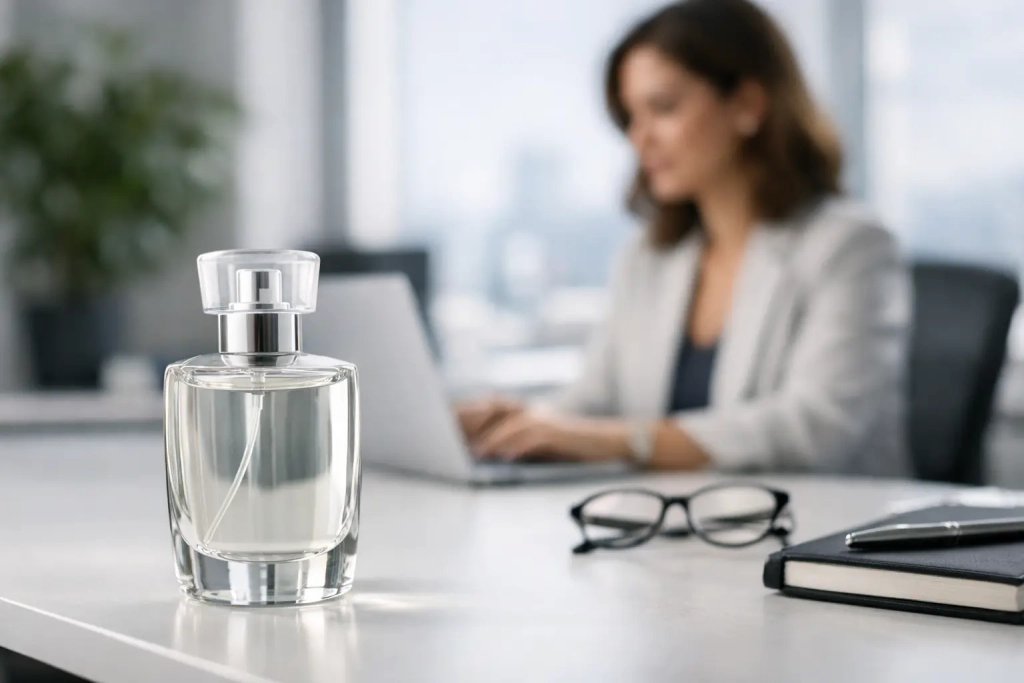
That sounds simple, but low sillage is not just a product category. It is a mix of formula, concentration, skin chemistry, dose, and application. The same fragrance can be discreet on one person and much louder on another. Choosing well means understanding both the scent profile and the way it behaves once it hits skin.
What makes a perfume office-appropriate?
For office wear, the goal is a scent bubble that stays within personal space. People often confuse this with weak performance, but the two are not the same. A fragrance can have solid longevity and still project very little. In fact, that is often the ideal setup for work – you smell polished for hours, but only someone standing close notices.
Office-appropriate fragrance usually has three traits. First, it avoids sharp openings that dominate a room, especially heavy aldehydes, dense syrupy gourmands, and aggressively diffusive white florals. Second, it develops smoothly rather than announcing itself in waves. Third, it feels clean, balanced, and stable over time.
This does not mean every office scent has to smell like soap or fresh laundry. Woods, tea notes, soft musk, powdery iris, sheer florals, skin scents, and restrained citrus can all work. The key is moderation in projection, not lack of personality.
Perfume for office low sillage – the notes that usually work best
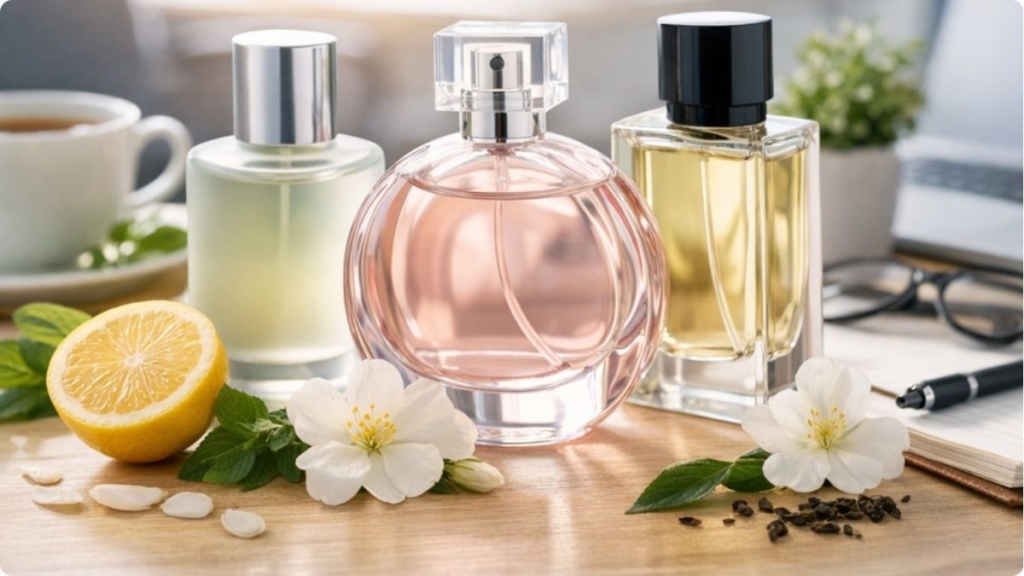
If you want better odds of finding a perfume for office low sillage, start with note families that tend to wear close to the skin.
Musk is one of the safest places to begin, especially clean musk, cotton musk, and skin musk styles. These often create a “your skin but better” effect rather than obvious perfume trail. Iris and violet can also work well because they bring a soft cosmetic dryness that reads polished instead of loud.
Tea fragrances are another strong option. Black tea, green tea, white tea, and mate often feel airy and composed, which suits professional settings. Soft woods such as cedar, sandalwood, and cashmere woods can add structure without pushing too far outward, though some modern woody-amber materials can be surprisingly diffusive.
Citrus deserves a more careful read. Light citrus perfumes often seem office-safe because they smell fresh, but a sparkling bergamot or grapefruit opening can project more than expected during the first 20 to 30 minutes. They usually settle down fast, which may still make them suitable if your commute is not packed shoulder-to-shoulder.
The most unpredictable group is floral. Rose can be low-key or expansive. Jasmine can be creamy and intimate or very assertive. Orange blossom and tuberose often travel farther than people expect. If you like florals for work, look for words such as sheer, soft, powdery, clean, or skin scent rather than luminous, intoxicating, solar, or opulent.
Best Low‑Sillage Office Perfumes (Floral • Citrus • Tea • Musk)
| Perfume | Brand | Category | Key Notes (Floral / Citrus / Tea / Musk) | Why It Works for Office |
|---|---|---|---|---|
| Chanel Chance Eau Tendre | Chanel | Women | Grapefruit, Jasmine, White Musk | Soft, airy, clean; low projection ideal for close spaces. |
| Jo Malone Wood Sage & Sea Salt | Jo Malone London | Unisex | Ambrette (musk), Sea Salt, Sage | Mineral‑fresh with subtle musk; stays close to skin. |
| Dolce & Gabbana Light Blue | D&G | Women | Lemon, Apple, Jasmine, Musk | Crisp citrus with soft floral‑musk drydown; non‑intrusive. |
| Salvatore Ferragamo F Black | Ferragamo | Men | Lavender, Apple, Pepper, Tonka | Clean aromatic with controlled sillage; office‑safe. |
| Serene Collection Foliage | AMD Perfumes | Women | Floral‑woody with soft musk | Elegant, understated, low projection suitable for work. |
| Ajmal NEEA | Ajmal | Women | Citrus, Floral, Musk | Light feminine scent with gentle musky base. |
| Ajmal PROSE | Ajmal | Men | Citrus, Aromatic, Musk | Clean masculine profile with soft diffusion. |
| Floral Musk (Inspired by My Way) | Craftier Perfumes | Women | Orange Blossom, Jasmine, White Musk | Feminine floral‑musk with moderate longevity but soft sillage. |
| Musk & Roses | Arabian Oud | Unisex | Rose, Jasmine, Citrus, Musk, Sandalwood | Fruity‑floral‑musky blend with elegant, moderate sillage. |
| Silver Mountain Water | Creed | Men | Citrus, Green Tea, Fruity, Musky, Woody, Aromatic, fresh Floral | Crisp, fresh, and invigorating with citrus and musk. Ideal for warm office days. |
| Eau Parfumée au Thé Blanc | Bvlgari | Women | Tea, Artemisia, Bergamot, Orange Blossom | Powdery, floral, and clean with white musk; delicate and office-friendly. |
| Green Tea, | Elizabeth Arden | Women | Green Tea, Jasmine, Musk, Oakmoss | Light citrus and mint with soft musk; refreshing and gentle sillage. |
| Guidance EDP | Amouage | Unisex | Pear, Osmanthus, Saffron, Musk (floral‑musky) | Refined floral‑musky scent with controlled projection for professional settings. |
Why low sillage depends on your skin
This is where many office fragrance guides stop too early. Sillage is not fixed just because a brand says a perfume is soft.
Skin temperature, oil level, and hydration all affect projection. Warmer skin can lift a fragrance and make it bloom more aggressively. Oily skin often holds scent longer and can amplify certain notes, especially musks, woods, and sweet bases. Dry skin may shorten wear time, but it can also make some fragrances feel sharper at the top because they do not diffuse as evenly.
Body chemistry matters too. Some people pull sweetness from amber and vanilla bases. Others sharpen green notes or make musks more metallic. That is why one person’s subtle office scent becomes another person’s noticeable trail.
The practical move is to test on your own skin, not a paper strip alone. Spray once on the inside of the forearm, wait 15 minutes, then check at one hour and three hours. If you can smell it clearly every time you move your arm, it may already be too active for a quiet office. If it comes and goes unless you intentionally sniff the area, that is usually closer to the mark.
Concentration matters, but not in the way people think

It is tempting to assume eau de cologne is always safer than eau de parfum. Sometimes that is true, but not reliably.
Concentration affects longevity and richness, but raw materials and formula architecture often matter more for sillage. A bright eau de toilette loaded with diffusive aromatics can project harder than a smooth eau de parfum built around soft musks and woods. Likewise, an extrait can wear very close if it is dense and skin-like rather than sparkling.
For office use, do not shop by concentration alone. Look at how the fragrance behaves. Reviews that mention “close to the skin,” “intimate,” “soft trail,” or “personal scent bubble” are usually more useful than just EDT or EDP on the label.
How to apply perfume for office low sillage
Application can rescue an otherwise borderline fragrance.
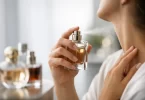
If your scent is office-safe in profile but slightly too present, reduce both spray count and placement. One spray on the chest under clothing often works better than two sprays on the neck. Fabric can also hold scent in a more controlled way than warm pulse points, though delicate materials may stain and some formulas linger on clothing much longer than intended.
Hair can be tricky. It carries scent well, which sounds helpful, but that also means movement creates a noticeable trail. For a low-sillage office result, hair is usually not the best target unless you are using a dedicated hair mist.
Moisturized skin can improve evenness and longevity, but use an unscented lotion. This helps the fragrance hold without forcing you to overspray. If a perfume disappears too fast on your skin, the answer is not always more sprays. Sometimes it is better skin prep and a better match to your chemistry.
One useful test is the elevator rule. Apply your fragrance the way you plan to wear it, wait 20 minutes, then stand in a small room. If the scent feels obvious in still air, scale back.
Scent profiles that usually perform well at work
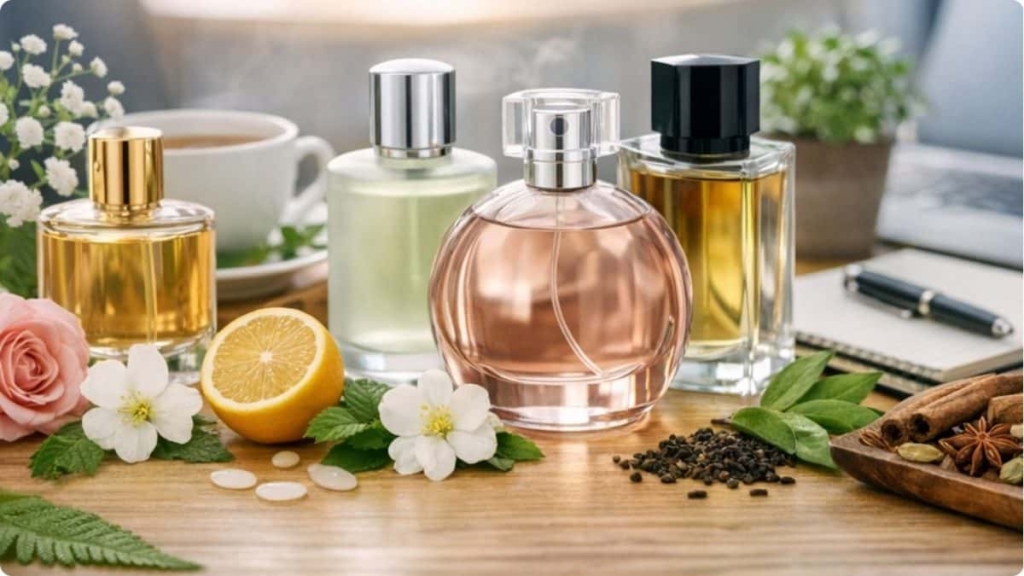
Some fragrance styles consistently fit office life better than others because they stay tidy through a full wear cycle.
Clean musky florals are one of the strongest categories because they smell groomed without becoming sterile. Tea-wood combinations also do well, especially when they avoid smoky or incense-heavy edges. Powdery iris and soft violet can read professional and calm, particularly in cooler offices.
If you prefer something warmer, understated sandalwood, light fig, soft suede, and restrained amber musks can work. The caution is sweetness. Once vanilla, tonka, caramel, or praline become prominent, the fragrance may feel heavier in close quarters even if the projection is technically moderate.
Aquatic scents are another mixed case. Some are crisp and subtle. Others rely on synthetic freshness that cuts through air in a way that feels louder than a cozy musk would. This is why testing matters more than category labels.
When a “soft” perfume still feels too strong
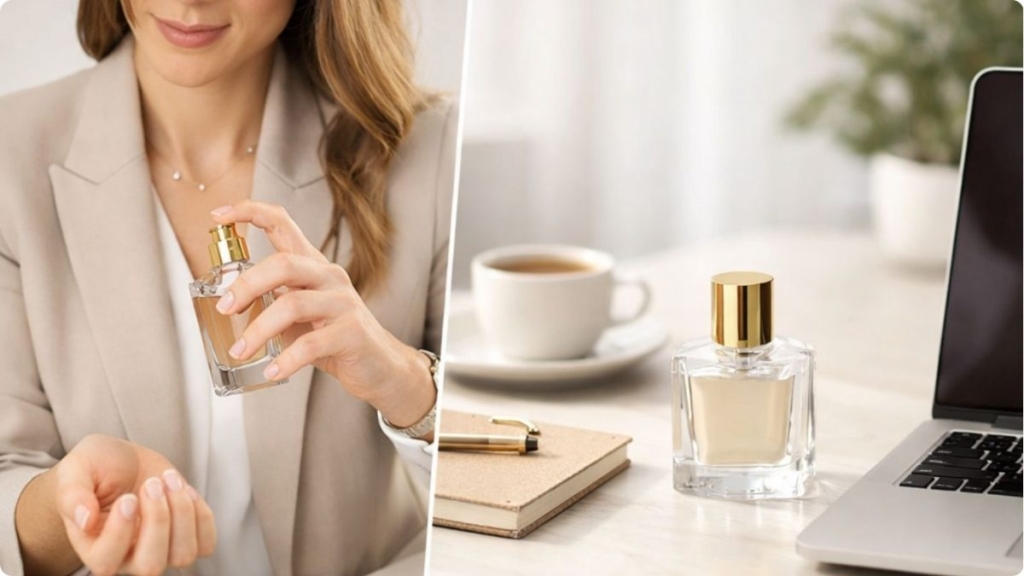
Sometimes the issue is not projection volume but note character.
A fragrance can sit close to the skin and still bother coworkers if it features notes that read sharp, powder-heavy, medicinal, or very sweet. Office sensitivity is often about perception as much as distance. A close-wearing patchouli-chocolate scent may feel more intrusive than a mildly projecting tea musk because it announces a stronger identity.
This is especially relevant in open offices, healthcare settings, classrooms, and client-facing roles. In those spaces, the safest choice is usually a scent that reads clean, dry, or lightly woody instead of edible or narcotic.
If you love richer perfumes, save them for evenings and use the office as a separate fragrance category. That approach is not about limiting your taste. It is about matching performance to environment.
How to judge before you commit
Sampling is worth the extra step when office wear is the goal. Do not decide from the opening alone, and do not judge only in the first five minutes. Many fragrances that start fresh turn sweeter, creamier, or woodier as they dry down.
Wear a sample on a normal workday and pay attention to three checkpoints: the first 30 minutes, the two-hour mark, and the moment you lean forward over your desk. That last one tells you whether the scent stays personal or keeps expanding with body heat.
If you are building a work rotation, aim for two or three different low-sillage profiles rather than one all-purpose bottle. A clean musk for daily wear, a tea or iris scent for polished days, and a soft wood for cooler weather gives you range without drifting into overly assertive territory.
At PerfumeOnSkin.com, this is the core principle behind smarter fragrance selection: a good perfume is not just one you like in the air. It is one that behaves the right way on your skin, in your setting, at the dose you actually wear.
The best office fragrance is the one people notice only when they are close enough to notice you.




Leave a Comment