
Perfume fading by lunch often starts before the first spray. If you want to know how to moisturize skin for perfume, the goal is not just softer skin – it is creating a better surface so fragrance evaporates more slowly, develops more evenly, and stays noticeable longer.
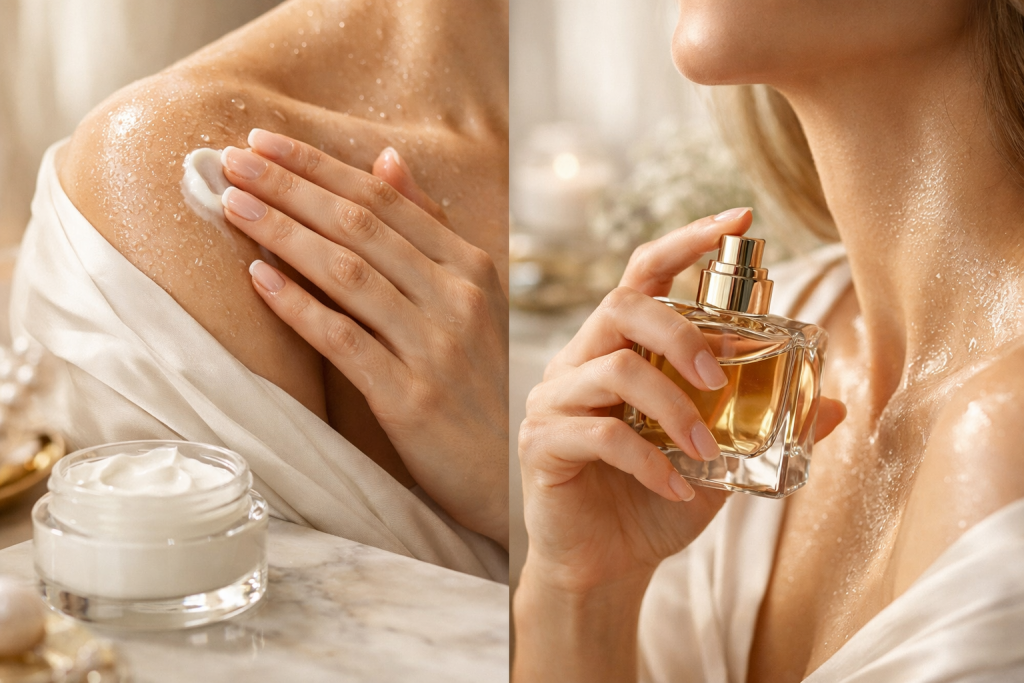
A lot of fragrance advice stops at “apply lotion first.” That is directionally right, but incomplete. The type of moisturizer, where you apply it, when you apply it, and how it interacts with your perfume all affect the result. For some people, the wrong body cream can muddy top notes or compete with the scent itself. For others, proper skin prep can add several hours of wear from a bottle they already own.
Why moisturizing matters for fragrance performance
Perfume lasts longer on skin that is not dry because fragrance oils have a better surface to hold onto. On very dry skin, alcohol and volatile notes tend to flash off faster, which can make a fragrance feel weak, sharp, or short-lived. Moisturized skin slows that process down.
This does not mean moisturizer changes every perfume in the same way. Fresh citrus scents and light florals usually benefit the most because they are built from notes that evaporate quickly. Dense ambers, gourmands, and woody perfumes may already have strong staying power, but they can still smell smoother and more rounded on moisturized skin.
There is also a skin chemistry angle. Dryness can exaggerate rough edges in some formulas, especially fragrances with bright aldehydes, spices, or strong aromatics. A simple moisturizer can make the transition from opening to dry-down feel more balanced. That is one reason two people can wear the same perfume and get different results.
How to moisturize skin for perfume the right way
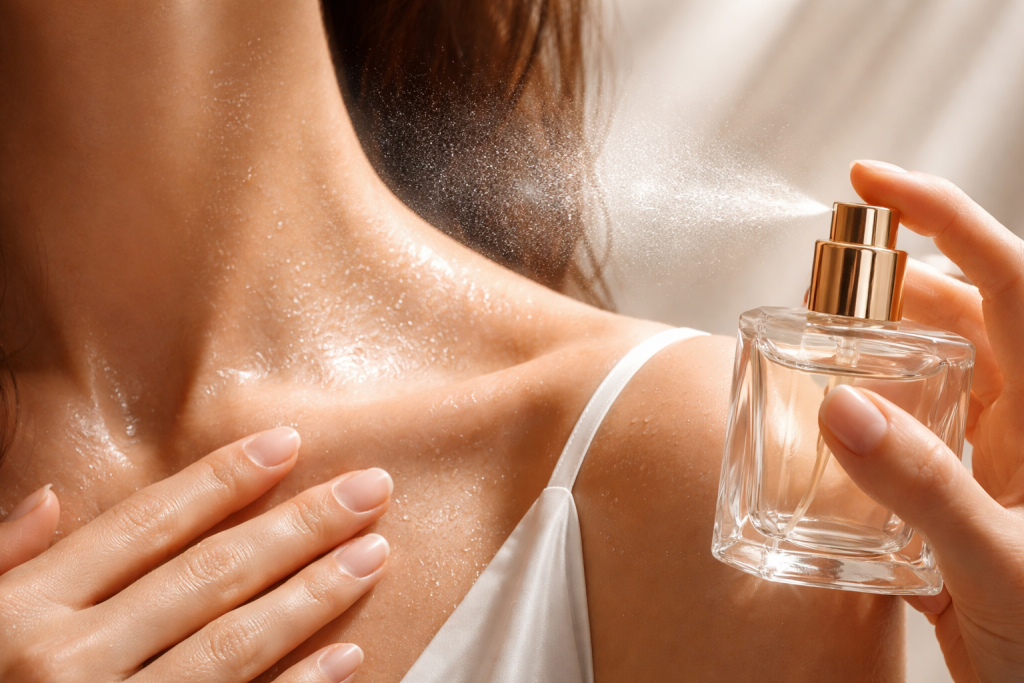
The best approach is usually the simplest one: use a plain, unscented moisturizer on the areas where you apply fragrance. Focus on pulse points if that is where you normally spray, but do not limit yourself to wrists and neck if your perfume performs better on the chest, forearms, or behind the knees.
Apply moisturizer to clean skin and give it a minute or two to settle. You do not want skin to feel wet or slippery when you spray. A light layer is enough. The point is to reduce dryness, not coat the area so heavily that the fragrance sits on top without diffusing properly.
If you are applying perfume after a shower, that is often the easiest time to do it. Skin tends to be slightly damp, which helps lock in moisture. Dry off, apply moisturizer, wait briefly, then spray your fragrance. This sequence gives you the best chance of improving both longevity and consistency.
Choose the right moisturizer
Unscented is usually the safest option. If your lotion has a strong fragrance, it can interfere with the perfume’s opening and make the full scent profile harder to read. That matters even more if you are testing a new fragrance and want to understand how it actually performs on your skin.
Texture matters too. A lightweight lotion works well for normal skin and daytime wear, especially if you dislike any residue. A cream or balm can be more effective if your skin is very dry or if you are trying to support a perfume that usually disappears fast. The trade-off is that richer products may slightly soften projection at first, especially if applied too heavily.
Petrolatum-based products, plain body creams, and fragrance-free ceramide moisturizers can all work well. The best choice depends on your skin type and tolerance. If you are acne-prone on the chest or neck, a lighter non-comedogenic formula may make more sense than a heavy occlusive.
Where to apply moisturizer for the best payoff
Most people think only about pulse points, but perfume performance often improves when you prep the broader area where fragrance actually lands. If you spray your neck and collarbone, moisturize that zone. If you prefer one spray on the chest under clothing, moisturize there. If wrists tend to wash off quickly from handwashing, your forearms may become a better test area.
This matters because friction and environmental exposure change how scent behaves. Wrists are classic, but they are also one of the easiest places to disrupt perfume. Neck application can project well, but skin there may be more sensitive. Clothing-adjacent areas like the chest often give a more stable wear pattern.
The practical rule is simple: moisturize the skin that will carry the fragrance, not just the spots people talk about most.
When to use lotion, cream, or petroleum jelly
There is no single best base for every perfume. It depends on what you want to improve.
If your goal is everyday wear and a natural feel, an unscented lotion is usually enough. If your skin is consistently dry and fragrance disappears fast, a richer cream may perform better. If you are trying to anchor a notoriously fleeting perfume for a special event, a tiny amount of petroleum jelly on key points can help reduce evaporation.
That said, heavier is not always better. Too much occlusive product can flatten the opening, especially with sparkling citrus, green notes, and sheer musks. You may get more longevity but less lift. For a resinous amber or vanilla, that trade-off may be fine. For a bright neroli cologne, it might make the fragrance feel dull.
Moisturizing without changing the scent
If you want the perfume to smell as close to its intended profile as possible, keep your skin prep neutral. Fragrance-free products are ideal. Even “lightly scented” moisturizers can add a creamy, powdery, or soapy backdrop that shifts the perfume more than you expect.
This is especially relevant when comparing samples, testing a new purchase, or trying to understand your own skin chemistry. If the base product has its own scent trail, you are no longer evaluating the perfume on clean terms.
There is one exception: matching body products from the same fragrance line. A coordinated lotion can reinforce the scent and sometimes improve wear time. But even then, performance varies. Some scented body lotions are weaker than expected, while others alter the balance by emphasizing sweeter or muskier facets.
Common mistakes that reduce performance
The biggest mistake is using too much product. If skin feels greasy, your perfume may not diffuse cleanly. Another common issue is spraying immediately after applying a heavy cream without letting it absorb. That can create a smeared effect rather than a clear opening.
Scented moisturizers are another frequent problem. People often think they are helping a perfume last when they are actually creating a layering combination that competes with it. This is not always bad, but it should be intentional.
Rubbing wrists together after spraying is still a performance killer for some formulas, especially delicate openings. Moisturizing helps, but it does not cancel out friction. If you want a cleaner development from top to dry-down, spray and let the fragrance settle on its own.
How to test what works on your skin
The most reliable method is to compare one perfume on two areas of skin: one moisturized, one not. Use the same number of sprays and check the scent at 15 minutes, 2 hours, and 6 hours. Pay attention to three things: how long it lasts, how far it projects, and whether the scent profile changes.
You may find that one fragrance becomes richer and longer-lasting with lotion, while another loses some brightness. That is normal. Skin prep is not just about longevity. It also affects texture, projection, and note clarity.
If you wear several fragrance styles, build your routine around categories rather than forcing one method on everything. Fresh daytime scents may do best with a light lotion. Dense evening scents may need little more than healthy, hydrated skin. Fleeting skin scents might benefit from a targeted balm on pulse points.
A better fragrance routine starts before the spray
Learning how to moisturize skin for perfume is really about controlling the variables you can control. You cannot change the formula in the bottle, but you can improve the surface it sits on. That often means better wear time, a smoother development, and fewer surprises from scents that seem inconsistent.
If fragrance disappears quickly on you, start with a fragrance-free moisturizer and test methodically. Small changes in skin prep can make a bigger difference than adding extra sprays. And when your perfume performs the way it should, choosing what to wear becomes a lot easier.


Leave a Comment