
Blind buying usually feels smart right up until the first spray. The bottle looked perfect, the notes sounded like a fit, the reviews were glowing – and then it turns sour on your skin, disappears in an hour, or wears far louder than you expected. A good guide to blind buying perfume safely has to do more than list popular scents. It needs to help you predict fit, performance, and skin behavior before you commit.
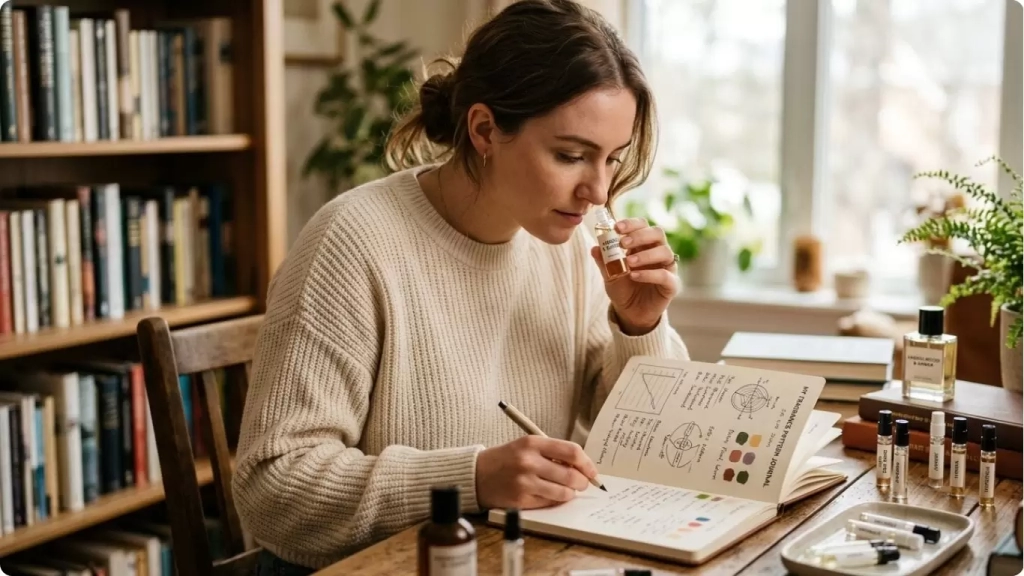
That is the real goal. Blind buying is never risk-free, but it can be made far more controlled when you evaluate perfume the way a fragrance specialist would: by separating scent profile from wear profile, and both from marketing.
Why blind buying goes wrong
Most bad blind buys happen for predictable reasons. The first is confusing note lists with the full wearing experience. Seeing vanilla, iris, or bergamot in a description does not tell you whether the perfume will smell dry or creamy, airy or dense, clean or sweet once it settles.
The second issue is skin chemistry. A perfume that reads smooth and balanced on one person can turn sharp, powdery, metallic, or faint on another. Body heat, skin moisture, oil level, and even how much you typically perspire can change both development and projection.
The third problem is review mismatch. Many shoppers read a review and assume agreement on scent means agreement on outcome. It does not. Someone can love a perfume because it projects heavily for eight hours, while you may need something more controlled for office wear. Another reviewer may describe a scent as “fresh” when they really mean soapy, aldehydic, or citrus-forward. Those are not always the same thing on skin.
A guide to blind buying perfume safely starts with your own pattern
Before you assess any new fragrance, get clear on what already works on you. This is the step most people skip, and it is the one that reduces mistakes fastest.
Look at three or four perfumes you already enjoy wearing, not just smelling from the bottle. Ask what they have in common once they are on your skin. Maybe your best performers share musks, ambroxan, patchouli, sandalwood, or vanilla. Maybe your skin amplifies white florals but mutes citrus. Maybe heavy gourmands last well on you but feel too dense in warm weather.
This matters because blind buying should be based on proven on-skin behavior, not wishful thinking. If your history says green perfumes turn bitter on you, a new green release is not automatically a safe buy just because the bottle is beautiful and the launch is popular.
Best Blind Buy Gucci Perfumes (Men & Women)
| Perfume Name | Gender | Scent Profile | Why It’s a Safe Blind Buy | Why It’s a Safe Blind Buy |
|---|---|---|---|---|
| Gucci Guilty Pour Homme EDP | Men | Woody, Aromatic, Spicy | Universally appealing, great longevity, ideal for daily wear | Universally appealing, great longevity, ideal for daily wear |
| Gucci Intense Oud EDP | Unisex | Oud, Amber, Incense | Rich and luxurious, loved by oud fans, elegant evening scent | Rich and luxurious, loved by oud fans, elegant evening scent |
| Gucci Bloom Eau de Parfum | Women | White floral, Jasmine, Tuberose | Feminine, fresh, and romantic; a bestseller with wide appeal | Feminine, fresh, and romantic; a bestseller with wide appeal |
| Gucci Flora Gorgeous Gardenia EDP | Women | Floral, Fruity, Sweet | Youthful and vibrant, perfect for spring/summer, crowd favorite | Youthful and vibrant, perfect for spring/summer, crowd favorite |
| Gucci Guilty Absolute EDP | Men | Leather, Wood, Earthy | Bold yet refined, unique signature scent with strong projection | Bold yet refined, unique signature scent with strong projection |
Blind buying a perfume can feel uncertain, but understanding how each Gucci fragrance performs makes the choice much easier. This guide highlights popular Gucci perfumes known for reliable longevity, balanced sillage, and versatility across different occasions.
By comparing how these scents last on the skin and when they are best worn, you can confidently choose a fragrance that matches your style even when shopping online. This simple overview helps you make a safe and informed blind buy without needing to test the perfume in person.
Comparison Table: Gucci Perfumes (Longevity • Sillage • Occasion Suitability)
| Perfume | Longevity | Sillage | Best Occasions |
|---|---|---|---|
| Gucci Guilty Pour Homme EDP | Moderate–Long (6–8 hrs) | Moderate | Daily wear, office, casual outings |
| Gucci Intense Oud EDP | Long–Very Long (8–12 hrs) | Strong | Evenings, formal events, winter/autumn |
| Gucci Bloom EDP | Moderate (5–7 hrs) | Moderate | Daytime, brunch, spring/summer |
| Gucci Flora Gorgeous Gardenia EDP | Moderate (4–6 hrs) | Soft–Moderate | Casual daytime, warm weather, youthful settings |
| Gucci Guilty Absolute EDP (Men) | Long (8–10 hrs) | Strong | Nights out, cold weather, signature scent lovers |
How to read fragrance notes without getting fooled
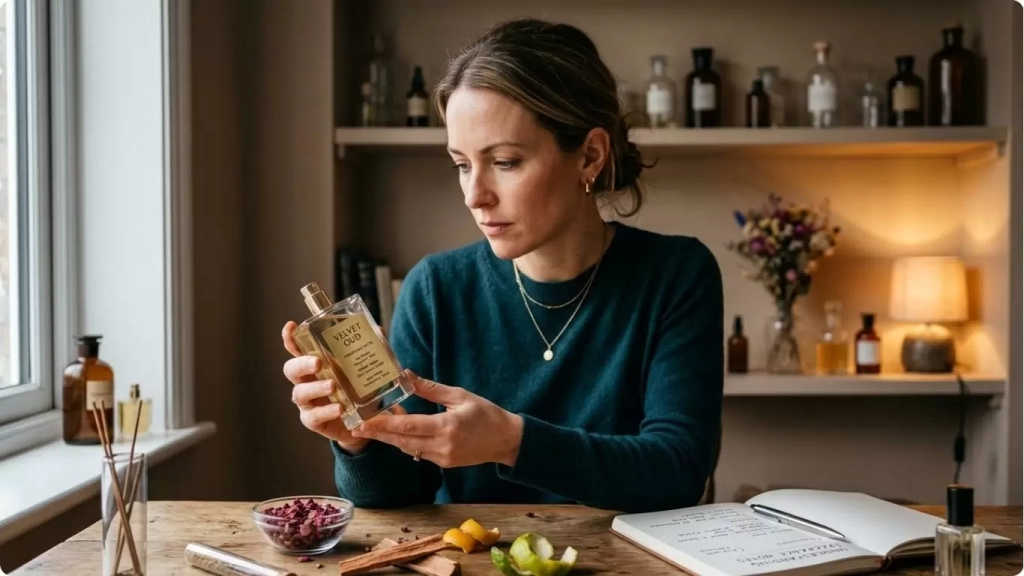
Notes are useful, but only if you treat them as clues rather than promises. A rose perfume can be jammy, dewy, powdery, dark, or sparkling. Vanilla can smell edible, woody, smoky, or dry. Musk can register as clean laundry, soft skin, or something almost invisible.
The safer approach is to read the full structure. Top notes tell you the opening mood, heart notes suggest the character, and base notes give the lasting impression. For blind buying, the base often matters most because it is what stays on your skin for hours. If you know you dislike patchouli-heavy drydowns or strong ambroxan trails, that should carry more weight than an appealing citrus opening.
Accords are often more helpful than individual notes. If a perfume is consistently described as powdery floral, woody amber, clean musk, fruity shampoo-like, or smoky resinous, you are getting closer to how it will actually wear.
Use reviews to measure performance, not just hype
Reviews are useful when you read them like data. Instead of looking for “love” or “hate,” look for repeated patterns. If many reviewers mention short longevity, loud projection, a synthetic opening, a sharp alcohol burst, or a major change after thirty minutes, those comments are more valuable than broad praise.
Pay extra attention to reviewers who describe climate, skin type, and wearing context. A scent that performs beautifully in cool weather may feel heavy in humid heat. A fragrance that lasts all day on moisturized skin may fade quickly on dry skin.
It also helps to separate comments about smell from comments about use case. “Beautiful fragrance” is not enough information. For a safer blind buy, you want to know whether it is office-safe, date-night strong, casual, formal, intimate, airy, or best kept to cold weather.
Check concentration, not just the name
One reason blind buys surprise people is that they assume all versions of a fragrance behave similarly. They often do not. Eau de toilette, eau de parfum, parfum, intense, extrait, and flankers can differ in sweetness, density, and projection.
A lighter concentration may emphasize citrus, aromatics, or freshness. A richer one may push vanilla, woods, resins, or musks forward. Sometimes the stronger version is not simply “more” of the original. It can be warmer, darker, sweeter, or less versatile.
For safety, never blind buy based on the reputation of a different concentration. Treat each version as its own fragrance.
Match the fragrance family to your risk tolerance
Some fragrance families are generally easier to blind buy than others, though there are exceptions. Clean musks, soft woody scents, and balanced fresh fragrances tend to be lower risk because they are easier to wear in more situations. Loud white florals, animalic scents, dense gourmands, oud-heavy blends, and strong leather or smoky fragrances usually carry more risk because they are more polarizing.
This does not mean you should avoid bold perfumes. It means your buying strategy should reflect your tolerance for uncertainty. If you need a daily wear scent, a challenging artistic perfume is a poor blind-buy candidate. If you already know you love tuberose, incense, or boozy amber on your skin, your personal risk profile changes.
Price should change your process
The more expensive the bottle, the less room there is for guesswork. That sounds obvious, but many buyers become less cautious when a fragrance has luxury branding or niche status. Price does not make a scent safer. In some cases it makes it riskier because niche compositions can be more distinctive and less mass-appealing.
For lower-cost blind buys, a moderate miss may still feel acceptable. For premium bottles, you should have stronger evidence: familiar note structure, consistent review patterns, and a clear reason to believe the scent family performs well on your skin.
If you are deciding between several options, the safest choice is often not the most exciting one. It is the one with the fewest unknowns.
A practical blind-buy filter you can actually use
A good guide to blind buying perfume safely needs a repeatable screen. Before buying, ask five questions.
First, have I worn and enjoyed this fragrance family on my skin before? Second, do the base notes support the kind of drydown I like? Third, do multiple reviews agree on longevity, sillage, and overall character? Fourth, does the concentration match my intended use? Fifth, if this misses the mark, is the price still acceptable?
If you cannot answer at least four of those confidently, it is probably not a safe blind buy.
Skin chemistry should influence what you buy
At PerfumeOnSkin.com, the useful question is not just “What does this smell like?” but “What does this become on skin?” That difference matters. Dry skin may cause a fragrance to fade faster and reveal less complexity. Warmer skin can amplify sweetness, spice, and projection. Oily skin often holds fragrance better, but it can also make some compositions feel heavier.
If your skin tends to eat citrus and fresh florals, prioritize fragrances with supportive woods, musks, or resins in the base. If your skin amplifies sweetness, be careful with caramel, tonka, dense vanilla, and fruity gourmands unless that is exactly what you want. If sharp aromatics or white musks turn screechy on you, treat those profiles as high-risk even when they are popular.
Blind buying gets safer when you stop buying for the tester strip fantasy and start buying for your actual wear pattern.
When a blind buy is reasonable and when it is not
A blind buy is reasonable when the fragrance sits close to profiles you already wear well, the price is manageable, and the scent has a clear use in your routine. It is less reasonable when you are buying outside your comfort zone, paying premium pricing, or relying only on branding and social buzz.
Gift buying adds another layer. If you are buying for someone else, broad appeal and versatility matter more than artistic originality. In that case, clean woods, fresh citrus-aromatics, and soft florals are usually safer than bold gourmands, smoke, or challenging oud styles.
The smartest blind buyers are not the most adventurous. They are the most disciplined. They know which details predict success, which ones are mostly marketing, and when to walk away from a bottle that looks good on paper but does not fit their skin, budget, or daily life.
A good perfume should earn its place after the first spray, not ask you to justify the purchase afterward.



Leave a Comment