
You spray the same perfume on two people, and one still smells great at dinner while the other loses it by lunch. That is why so many fragrance wearers ask, does skin pH affect perfume longevity? The short answer is yes, but not in the simple, all-explaining way it is often presented. Skin pH can influence how a perfume behaves, yet it is usually only one part of a much bigger wear-time equation.
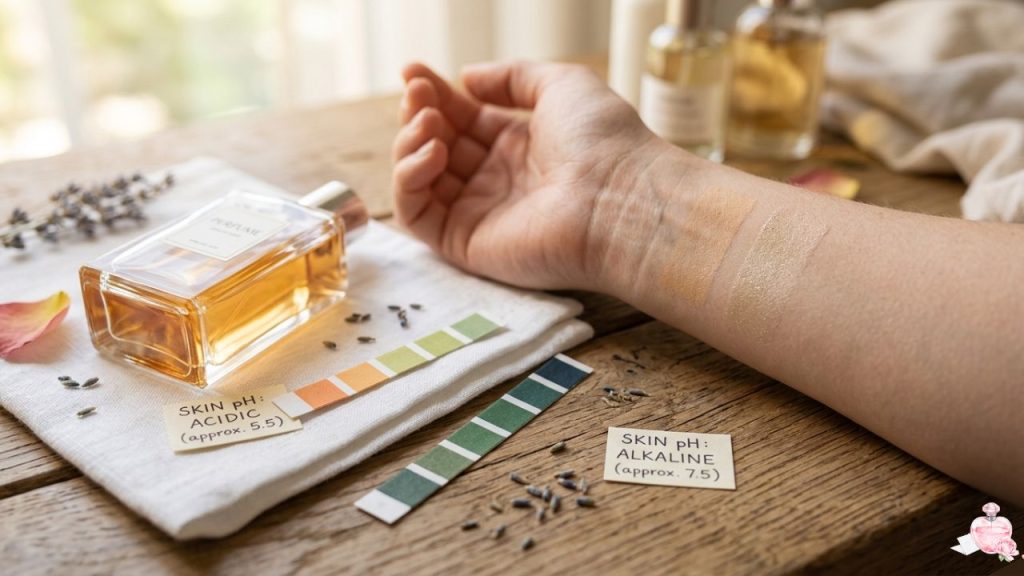
If you are trying to get more hours from a fragrance, focusing on pH alone can send you in the wrong direction. In most real-world cases, skin moisture, oil level, application method, fragrance concentration, and note structure have a bigger impact on longevity than pH by itself.
Does skin pH affect perfume longevity or just the smell?
Skin pH affects the surface environment where perfume first sits, so it can influence both the scent profile and how long the fragrance seems to last. Healthy skin is naturally slightly acidic, usually around pH 4.7 to 5.75. That acidity helps support the skin barrier, and it also shapes how aromatic materials interact with your skin over time.
That said, pH is not a switch that turns longevity on or off. Perfume evaporation is mostly driven by volatility, skin temperature, dryness, oil content, and the formula itself. A fresh citrus eau de toilette will still burn off faster than a dense amber extrait, even on skin with an ideal pH balance.
What pH can do is shift the way certain notes present themselves. On some people, bright top notes fade almost immediately, which can make the whole perfume feel short-lived. In reality, the perfume may still be there, but the remaining heart and base notes are softer, closer to the skin, or less noticeable to the wearer.
What skin pH actually changes on your skin
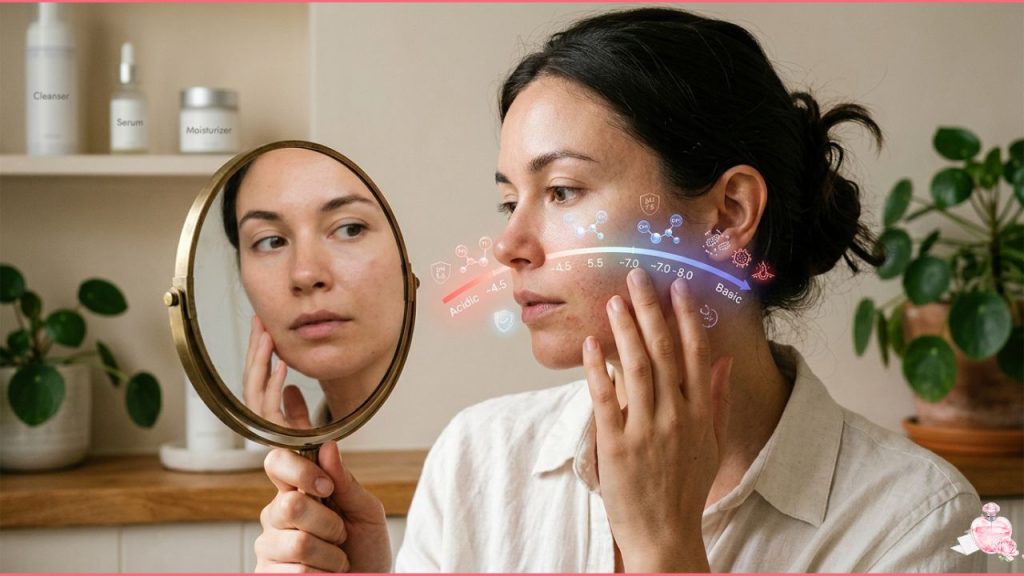
Perfume does not sit in a vacuum. It lands on a living surface that has water, sebum, salt, microbiome activity, and a protective acid mantle. Skin pH is part of that environment.
When your skin is more acidic or more alkaline than average, it may subtly change how quickly some materials break down, soften, or project. This is more noticeable in delicate compositions, especially those built around citrus, green notes, airy florals, or transparent musks. Heavier woods, resins, vanilla, patchouli, and ambers are usually less fragile on skin.
There is also a perception issue. If pH shifts the balance of top and heart notes, you may read that as poor longevity even when the base remains. Many wearers judge a fragrance by the opening they love most. Once that stage is gone, they assume the perfume disappeared.
So yes, pH can affect performance, but often by changing the shape of the wear rather than simply erasing the scent.
The factors that usually matter more than pH
If your perfume never lasts, these variables deserve attention first.
Skin dryness
Dry skin is one of the biggest reasons fragrance fades quickly. Perfume clings better to moisturized skin because there is a better surface for aromatic compounds to rest on. On very dry skin, the fragrance can evaporate faster and feel thinner within the first few hours.
This is why applying fragrance right after an unscented lotion often gives a more noticeable improvement than trying to alter skin pH. If you want a practical fix, hydration is usually step one.
Oil production
Slightly oilier skin often holds fragrance better than very dry skin. Natural oils can anchor scent molecules and slow the rate at which they lift off the skin. This does not mean oily skin always wins, because excess oil can also change how a fragrance smells, but in wear-time terms it often helps.
Fragrance concentration and formula
An eau de cologne, eau de toilette, eau de parfum, and extrait can wear very differently. Beyond concentration, the raw materials matter. Citrus, aromatic herbs, aquatic notes, and sheer florals are usually short-lived. Woods, balsams, musks, leather, and gourmand notes tend to last longer.
If you expect all perfumes to perform the same because your skin pH is stable, you will be disappointed. Some formulas are built for lift and freshness, not all-day endurance.
Application area and temperature
Warm pulse points can help projection, but they can also speed evaporation. Clothing and hair often hold scent longer than bare skin, though the scent may develop differently there. If longevity is the goal, where you apply matters almost as much as what you apply.
How to tell whether skin pH is affecting your perfume
Most people do not need lab-style skin testing. A better approach is controlled wear testing.
Try the same fragrance on your inner arm for three separate wears. On day one, apply it to bare dry skin. On day two, apply the same amount over unscented moisturizer. On day three, apply it to skin and one piece of clothing. Track how the opening, mid, and drydown behave over six to eight hours.
If moisturizing dramatically improves wear time, dryness is likely the bigger issue. If the perfume consistently smells sharp, sour, soapy, or oddly flat on your skin but behaves normally on clothing, your skin environment, including pH, may be playing a role. If the scent disappears everywhere, the formula itself may simply be light.
This kind of testing gives you more useful answers than general claims about body chemistry.
How to make perfume last if your skin chemistry works against it
Start with moisture, not more sprays
Before changing perfumes, change the surface. Apply an unscented body lotion or cream and let it settle for a minute before spraying. This creates a better base and often extends both projection and longevity.
Choose formulas with stronger staying power
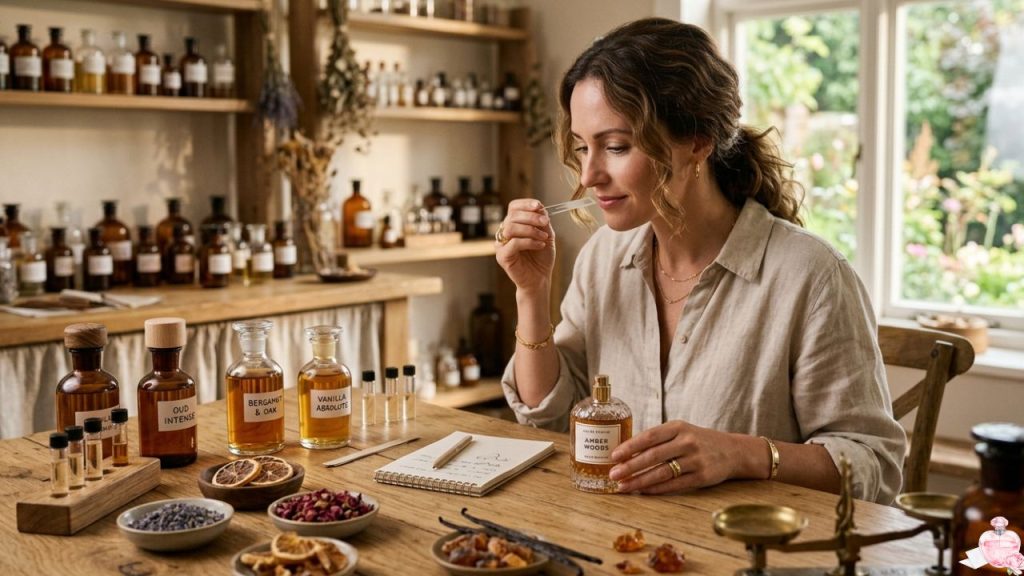
If your skin burns through fresh fragrances, look for compositions with a stronger base. Woods, amber, vanilla, musk, incense, and resinous notes usually survive skin variability better than sparkling citrus or watery florals.
This does not mean abandoning the scent families you love. It means choosing versions with more structure. For example, a citrus fragrance with woods and musk underneath often lasts better than a pure citrus splash.
Use skin and fabric together
Applying one or two sprays to skin and one light spray to clothing can create a more stable scent trail. Skin gives warmth and development. Fabric gives staying power. Just patch test delicate materials first, since some perfumes can stain.
Reapply strategically
Some perfumes are not meant to last ten hours. There is no failure in carrying a travel spray. If the fragrance is inherently light, a midday touch-up is often the most realistic solution.
Avoid over-correcting with acidic or alkaline skincare
Trying to manipulate skin pH with harsh toners, soaps, or DIY hacks is rarely worth it. Over-cleansing or disrupting the skin barrier can make fragrance performance worse by increasing dryness and irritation. Healthy skin is better fragrance skin.
Best perfume types for skin that seems to “eat” fragrance
If you feel like every scent vanishes on you, focus on perfume families that naturally resist quick evaporation. Eau de parfums and extraits with amber, oriental-style accords, woods, leather, gourmand notes, and dense musks are often more reliable. Chypres and resinous florals can also perform well.
The least forgiving options are usually cologne-style citruses, marine aquatics, very green scents, and minimal skin scents with low projection. These can still be beautiful, but they ask more from your skin and often need reapplication.
For readers trying to build a practical fragrance wardrobe, this is where sites like PerfumeOnSkin.com can be useful – not just for scent descriptions, but for understanding which formulas are more likely to perform on your actual skin.
| Perfume Category (by Concentration) | Best Fragrance Families (Dominant Base Notes) | Typical Longevity (on 'Scent-Eating' Skin) | Why It Works for 'Scent-Eating' Skin | Ideal For (Men/Women/Unisex) |
|---|---|---|---|---|
| Parfum / Extrait de Parfum (20–40% oil concentration) | Orientals / Ambers (Vanilla, Amber, Resins) | 8–12+ hours | Highest concentration of essential oils; least amount of alcohol (which speeds up evaporation). Denser molecules sink in and linger longer. | Both |
| Parfum / Extrait de Parfum (20–40% oil concentration) | Woody-Oud / Leather (Agarwood, Patchouli, Leather) | 8–12+ hours | Utilizes extremely potent, heavy base notes that act as powerful fixatives, anchoring lighter notes and anchoring themselves to the skin. | Leans Men / Unisex |
| Eau de Parfum (EDP) (15–20% oil concentration) | Gourmand (Caramel, Chocolate, Honey, Coffee) | 6–8+ hours | Offers a strong oil-to-alcohol ratio. Gourmand scents are built on sweet, dense molecules (like vanilla and sugar) that are slow to dissipate. | Leans Women / Unisex |
| Eau de Parfum (EDP) (15–20% oil concentration) | Deep Florals / Chypre (Tuberose, Jasmine, Moss, Patchouli) | 6–8+ hours | Uses heavy "white flowers" or earthy, mossy bases to anchor the composition, providing better staying power than light, airy florals or citruses. | Leans Women / Unisex |
| Oil-Based Perfumes / Attars (Variable, often 100% oil) | Single-Note Fixatives (Sandalwood, Musk, Amber) | Variable (6–12+ hours) | The lack of alcohol means zero initial burst, but steady, slow diffusion. Perfect for layering under alcohol-based scents to help them stick. | Both |
So, does skin pH affect perfume longevity enough to matter?
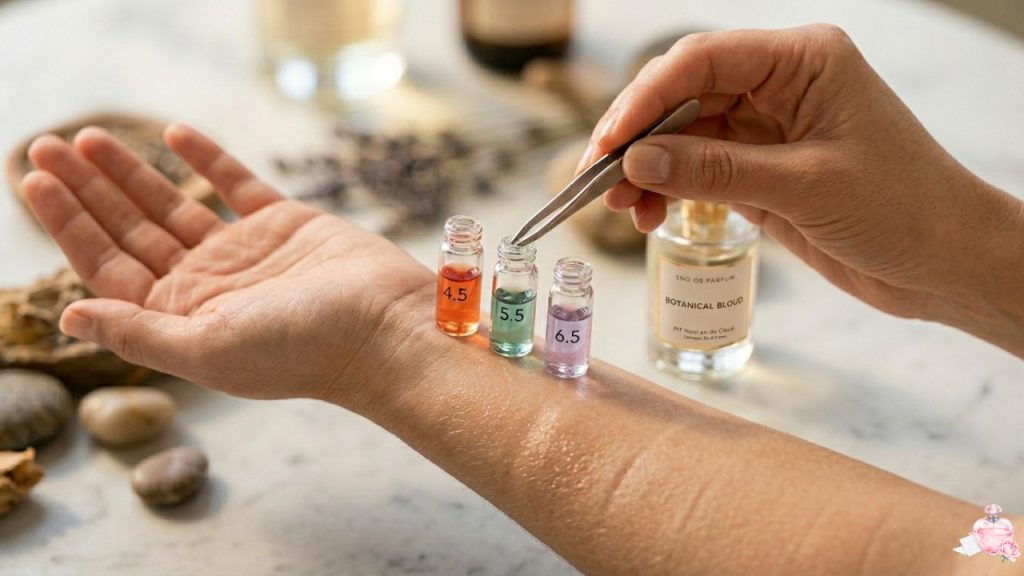
Yes, but usually not enough to treat it as the main culprit. Skin pH can influence how a perfume opens, shifts, and seems to fade. It matters most when your skin chemistry pushes already delicate notes to disappear faster or smell different than expected.
But if your goal is measurable improvement, start with the factors you can control more easily. Moisturize your skin. Test fragrance on both skin and fabric. Pay attention to concentration and note structure. Choose perfumes with stronger bases if your skin tends to wear scents lightly.
The most useful mindset is this: skin pH is part of your fragrance profile, not your fragrance destiny. Once you test methodically and match your perfumes to how your skin actually behaves, longevity gets much easier to predict – and improve.


Leave a Comment