
That fragrance that lasts eight hours in October but disappears by lunch in July is not your imagination. If you have ever wondered, can weather change perfume performance, the answer is yes – and often more dramatically than people expect. Temperature, humidity, wind, and even how dry your skin feels in different seasons can change how a perfume projects, develops, and fades.
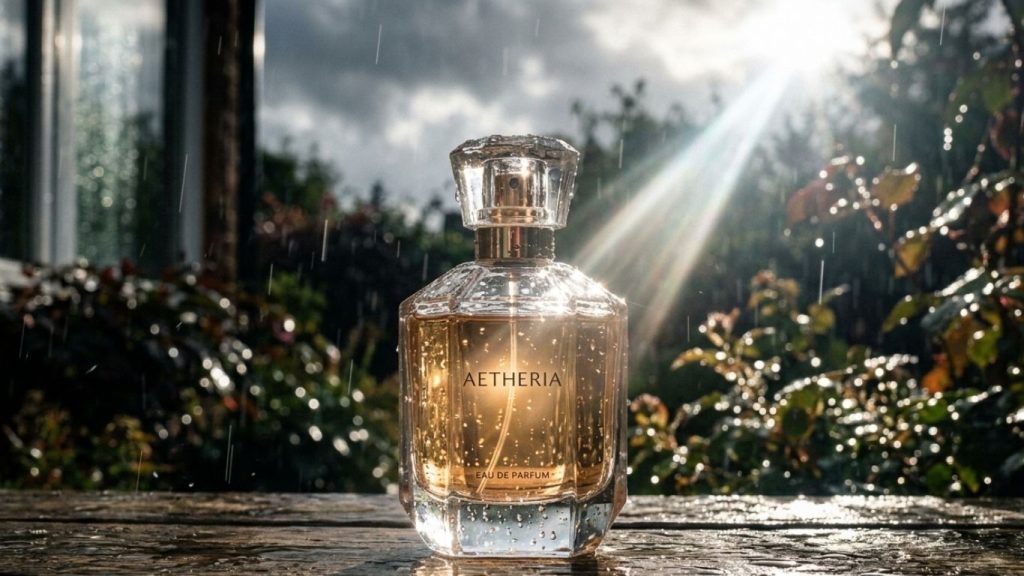
For anyone trying to get better wear from a fragrance, weather is one of the most practical variables to understand. It affects evaporation rate, how strongly notes lift off the skin, and whether a scent feels airy, sharp, heavy, or muted. The result is that the same bottle can behave like two different perfumes depending on the day.
How weather changes perfume performance
Perfume performance usually comes down to three things: longevity, projection, and development. Longevity is how long the scent remains detectable. Projection is how far it radiates from the skin. Development is how it moves from top notes to heart and base notes over time.
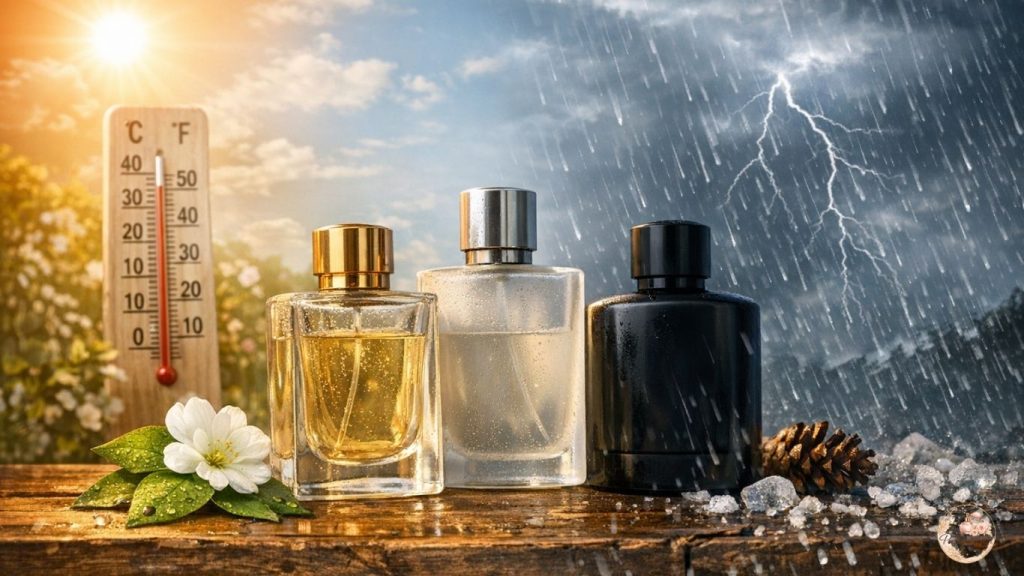
Weather influences all three because fragrance materials react differently under different environmental conditions. Warmth speeds evaporation. Cold slows it down. Humidity can amplify some notes while muting others. Dry air and dry skin can make a fragrance feel thinner and shorter-lived.
This is why a scent you judged once at a department store counter may behave differently when you wear it at home in another season. It is also why people often think a perfume was reformulated when the real difference is climate.
Heat usually increases projection and speeds the drydown
In hot weather, perfume molecules evaporate faster. That often means stronger opening projection, especially in the first 30 to 90 minutes. Citrus, green, aromatic, and alcohol-forward openings can feel brighter and louder. The trade-off is that the structure may move more quickly, so the perfume reaches its heart and base sooner.
On very warm skin, a sweet or heavy formula can also become overwhelming. Vanilla, amber, white florals, dense woods, and gourmand notes may bloom more than intended. A perfume that feels balanced in cool weather can feel thick, syrupy, or too diffusive in summer heat.
This does not always mean heat shortens wear. Some strong bases still last very well in high temperatures. But the wear experience changes. You may get more scent in the air and less slow, controlled development.
Cold weather can mute a fragrance
Cold air generally reduces volatility, which means perfume rises from the skin more slowly. The immediate effect is often weaker projection. A scent may sit closer, open more quietly, and feel flatter at first. This is especially common with fresh colognes, citrus blends, aquatic fragrances, and light musks.
That can make people overspray. Sometimes that works, but sometimes it creates a delayed effect indoors, where heat brings the perfume back to life all at once. A fragrance that seemed soft outside can suddenly feel much stronger in a heated office, car, or restaurant.
Cold weather can also favor richer compositions. Resins, spices, leather, incense, patchouli, and warm woods often feel more coherent and satisfying in lower temperatures because they do not expand as aggressively as they do in heat.
Can weather change perfume performance through humidity?
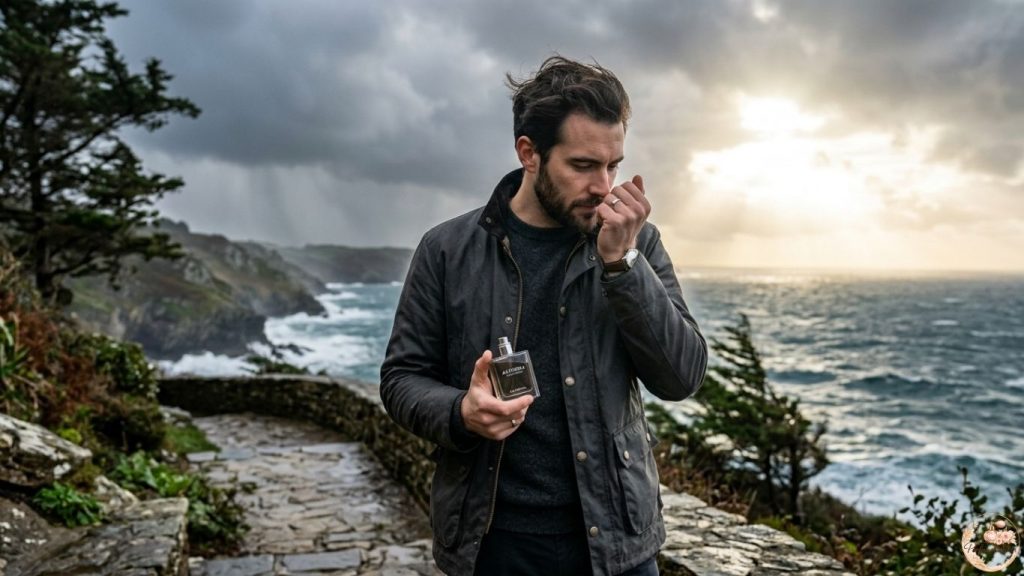
Yes, and humidity is one of the most misunderstood factors. Many people expect moisture in the air to help every fragrance last longer, but the effect is more complicated.
In moderate humidity, some perfumes project better because the air feels denser and helps carry the scent. Florals can feel fuller. Tropical notes can seem more natural. Musks may feel smoother. But in very humid conditions, a fragrance can also feel sticky, blurry, or overly sweet. Distinct note transitions may become less clear.
Humidity also changes how your skin behaves. If your skin retains more moisture, some fragrances may not vanish as quickly as they do on very dry winter skin. At the same time, sweat can interfere with the clean impression of a scent and alter how certain materials smell. This is one reason a perfume that performs beautifully on a cool spring day may smell cluttered during a humid August commute.
Wind, rain, and dry air matter too
Wind does not usually change the formula itself, but it changes your perception of performance. A perfume can seem weaker outdoors because scent molecules are carried away before you notice them. Then once you step inside, the fragrance seems to return. If you test only in breezy conditions, you may underestimate projection.
Rain and damp weather can make the air feel cooler and heavier at the same time. That sometimes softens sharp openings and helps woody or earthy notes feel more natural. There is no universal rule here because temperature still does much of the work, but many people notice that green, mossy, and aromatic fragrances feel especially good in rainy weather.
Dry air is often harder on performance than people realize. Winter indoor heating can leave skin dehydrated, which means perfume has less moisture and oil to hold onto. Even strong fragrances may feel shorter-lived if applied to dry skin. In that situation, what seems like a weak perfume may actually be a skin-prep problem.
Why the same perfume smells different by season

When people say a scent is a summer perfume or a winter perfume, they are usually describing performance as much as smell. Fresh compositions often feel better in heat because their lift matches the climate. Dense orientals and sweet gourmands often feel better in cold weather because they gain space to breathe without becoming oppressive.
But personal skin chemistry still matters. Someone with naturally oily skin may get excellent retention from citrus in warm weather, while someone with very dry skin may find the same scent disappears quickly regardless of season. Weather changes the playing field, but your skin remains part of the equation.
This is why performance testing should be repeated more than once. If you only test a fragrance on one day, you are not really testing the perfume. You are testing the perfume in that exact environment.
How to adapt your fragrance routine to the weather
The most useful approach is not to fight the weather but to adjust for it. In hot weather, apply less at first and place sprays strategically. Behind the ears, on the sides of the neck, or on clothing can be enough with a strong fragrance. Overapplying in heat is one of the fastest ways to turn a good scent into an exhausting one.
In cold or dry weather, skin prep matters more. Apply fragrance after moisturizing unscented skin so there is a better surface for it to hold onto. You may also get better results from spraying pulse points and a light mist on clothing or a scarf, if the fabric allows it.
Choice of concentration matters too. An eau de cologne or airy eau de toilette may feel perfect in summer but underpowered in winter. An eau de parfum or parfum can offer more stability in colder conditions, though concentration alone does not guarantee better performance. Formula style matters just as much.
You can also rotate by note family. Citruses, neroli, green tea, transparent florals, and clean musks tend to feel easier in heat. Amber, vanilla, spice, suede, woods, and incense often perform more convincingly in cold weather. That is not a rule. It is a shortcut that usually aligns with how materials behave on skin.
A better way to test perfume performance in changing weather
If you want a more accurate read on a fragrance, test it with a simple framework. Wear it on skin, not just paper. Note the temperature, humidity, and whether you are mostly indoors or outdoors. Check projection at 15 minutes, 2 hours, and 6 hours. Then repeat on another day with different weather.
This is the kind of practical comparison that reveals whether a perfume is truly weak, truly strong, or just variable. At PerfumeOnSkin, that variability is often the missing explanation behind mixed reviews. Two people can be honest about the same fragrance and still report very different results because they wore it in different conditions.
If your perfume seems inconsistent, do not rush to blame the bottle. Ask what the weather was doing, how hydrated your skin was, and whether you were smelling it in open air or a climate-controlled room. Small context shifts can produce big performance changes.
Weather will not change every fragrance in the same way, but it will change almost every fragrance somehow. Once you start noticing that pattern, you can wear your collection more strategically and get better results from scents you already own.



Leave a Comment