
You spray in the morning, catch a beautiful opening for 20 minutes, and by the time you reach your first coffee break it feels gone. If your fragrance disappears after one hour, that usually does not mean the perfume is defective. More often, it means one of three things is happening: the scent is evaporating quickly, your skin is absorbing it differently than expected, or your nose has stopped registering it.
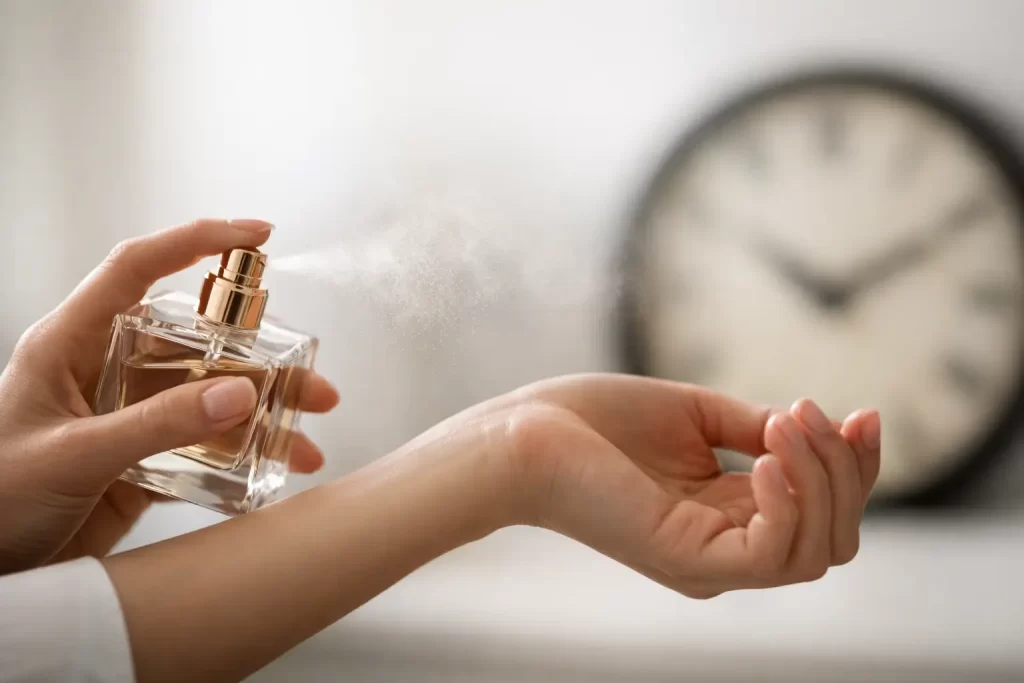
That distinction matters, because the fix depends on the cause. A light citrus cologne fading fast needs a different approach than a woody eau de parfum that is still present but no longer noticeable to you. The good news is that short wear time is usually something you can improve once you know what you are testing.
Why fragrance disappears after one hour
The biggest mistake people make is treating longevity as a single trait. In practice, wear time is shaped by formula, concentration, skin condition, application method, and even your environment that day. Two people can wear the same perfume and report completely different results, and both can be right.
Perfumes built around volatile top notes fade fastest. Citrus, green aromatics, watery florals, and some sheer musks are designed to feel airy and fresh, but that structure often comes with a shorter life on skin. If you are wearing a scent that opens with bergamot, neroli, lemon, or marine notes, one hour of strong presence may be normal, especially if the base is soft.
Skin chemistry also changes performance. Dry skin tends to let fragrance evaporate faster because there is less oil to hold scent molecules at the surface. Warm skin can amplify projection at first but burn through the top and heart notes quickly. Oily skin often holds fragrance longer, though it can alter the scent profile.
Then there is perception. A fragrance may not actually be gone. You may simply have become nose-blind to it.
It may still be there: projection vs. true longevity
A common reason people think a perfume vanished is that the loudest part of the scent has ended. Projection and longevity are not the same thing. Projection is how far the fragrance radiates from your skin. Longevity is how long it remains detectable at all.
Many fragrances project for 30 to 90 minutes, then settle close to the skin. That does not mean they are finished. It means they have moved from announcement to skin scent. If you only judge performance by what you can smell constantly around yourself, you will underestimate wear time.
There is also olfactory fatigue. Your nose adapts quickly to repeated exposure, especially with musks, ambroxan-heavy formulas, and certain woody aromatics. Other people may still smell your fragrance while you cannot. A simple test is to ask someone you trust to smell your wrist or shirt an hour or two later. Another is to apply to two areas and avoid sniffing one of them repeatedly.
Skin chemistry factors that shorten wear time
When a fragrance disappears after one hour on your skin but lasts much longer on paper or fabric, your skin is likely the main variable. That does not mean your skin is “bad” for perfume. It means you need a better match between formula and wearing method.
Dryness is the first thing to check. Fragrance adheres better to moisturized skin because oils and emollients slow evaporation. If you apply perfume to skin that is dehydrated from hot showers, indoor heating, exfoliating acids, or low humidity, the scent may flash off faster.
Skin temperature matters too. Pulse points are classic for a reason, but very warm areas can accelerate the opening phase. For someone who runs hot, the neck may give a beautiful burst and then a fast fade. In that case, applying to the chest, forearms, or even the back of the knees can create a steadier effect.
Body chemistry also shifts how notes unfold. Acidic skin, sweat, sebum level, and even the products already on your body can change the fragrance trail. This is why a perfume that lasts all day on a friend may feel faint on you within an hour.
Formula matters more than people think
Not every perfume is meant to be an all-day performer. Concentration helps, but it is not the whole story. An eau de parfum can still wear lightly if the formula emphasizes volatile ingredients. An eau de toilette can outlast expectations if it has resins, woods, vanilla, patchouli, or strong musks in the base.
Fresh categories are the most misunderstood here. Citrus, tea, aquatic, and clean musk fragrances often trade longevity for lift and transparency. That trade-off is not a flaw. It is part of the style. If your goal is eight-plus hours, the scent family itself may be working against you.
This is also why first impressions can mislead purchases. A perfume may smell incredible in the opening and still be a poor fit if performance matters most to you. Performance should be tested on your skin over a full wear, not judged from the first 15 minutes.
Application mistakes that make perfume fade faster
How you apply fragrance can shorten wear time before the perfume has a chance to settle. The most common issue is spraying too lightly. Many modern perfumes are softer than older formulas, and one small spray on the wrist may not be enough for meaningful wear.
Rubbing wrists together is another problem. It will not “destroy” every fragrance, but it can disturb the top notes and compress the opening, making the scent seem flatter and shorter-lived. Letting the perfume dry on its own usually gives a more accurate wear.
Applying only to exposed skin can also reduce longevity. Skin radiates and evaporates. Fabric tends to hold scent longer. That does not mean every perfume should be sprayed on clothing, since some formulas can stain delicate fabrics, but using a shirt collar, inner lining, or scarf when safe can noticeably extend performance.
Finally, timing matters. Fragrance applied right after moisturizing usually lasts better than fragrance sprayed onto very dry skin hours later.
How to make fragrance last longer than one hour
If you want measurable improvement, test one change at a time. Start with skin prep. Apply an unscented moisturizer or body lotion to the areas where you spray fragrance. Wait a minute, then apply your perfume. For many people, this alone adds one to three hours of skin presence.
Next, adjust placement. Try two sprays on the chest and one on each forearm instead of keeping everything on the wrists. The chest gives warmth under clothing, while forearms make it easier to catch the scent naturally without overspraying your neck.
You can also use a fabric strategy. One spray on clothing, when the material is compatible, often outlasts skin application by several hours. This is especially useful for fresh fragrances that disappear quickly on dry skin.
Layering helps when done with purpose. Use an unscented moisturizer, a matching body product if you have one, or a base scent that supports the perfume rather than competing with it. Vanilla, soft musk, and sandalwood bases often help anchor lighter florals or citrus compositions, but the result depends on the original fragrance.
If your perfume still fades fast after proper prep and application, the issue may be scent structure rather than technique. At that point, you may need to choose formulas built for more tenacity.
When the real fix is choosing a different type of perfume
Sometimes the honest answer is that the fragrance is doing exactly what it was designed to do. If you love sparkling citrus colognes, transparent florals, or skin scents, expecting all-day projection will lead to disappointment. Reapplication may be the right strategy, not a sign of failure.
If you want stronger longevity, look for fragrances with denser base notes and a track record of lasting well on skin. Woods, amber, resins, vanilla, tonka, patchouli, and certain musks generally perform better than purely fresh structures. This does not guarantee success, but it improves your odds.
It also helps to test perfumes in your real routine. Wear them during a normal workday, in your climate, on moisturized skin, and note both the one-hour mark and the four-hour mark. PerfumeOnSkin focuses on this exact question because the gap between smelling good at the counter and performing well on your body is where most buying mistakes happen.
A fragrance that disappears after one hour is frustrating, but it is also useful information. It tells you something about your skin, your application method, or the type of scent you are choosing. Once you treat perfume as performance on skin rather than promise in the bottle, better results get much easier to repeat.

Leave a Comment