
Perfume oil can smell richer, sit closer to the skin, and last surprisingly well – but only if you apply it with some intention. If you have ever wondered how to apply perfume oil so it performs better instead of disappearing fast or turning muddy, the answer usually comes down to placement, skin prep, and dosage.
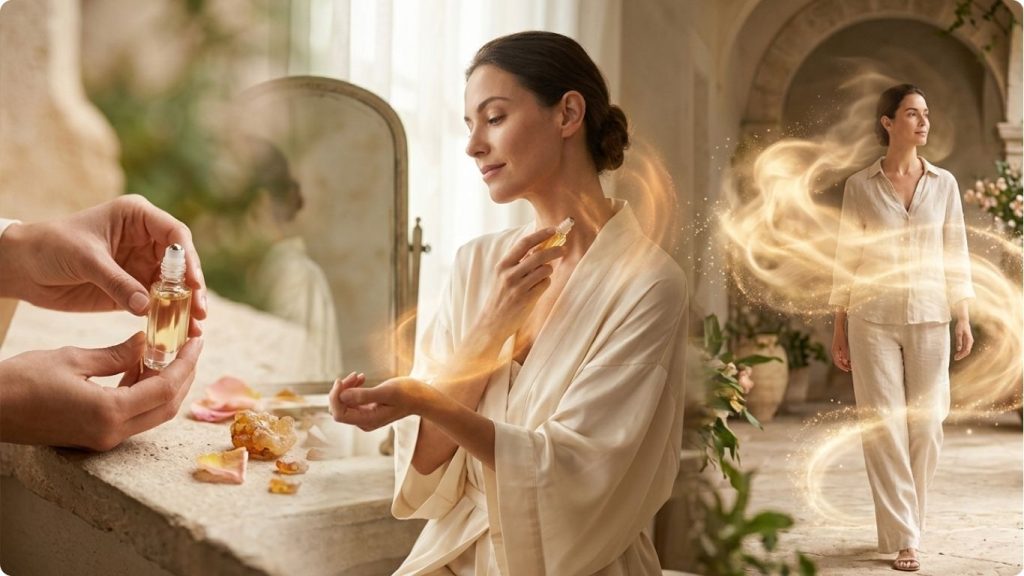
Unlike many alcohol-based sprays, perfume oils do not create a big initial cloud. They warm up more gradually on skin, which means small mistakes matter more. One extra swipe can make the scent feel dense. Putting it on dry skin can flatten the development. Rubbing it in can distort the opening and shorten the more nuanced stages.
How to apply perfume oil the right way
Start with clean, mostly dry skin. Perfume oil adheres best when your skin is free from sweat and heavy residue, but it also benefits from a little moisture retention. The best timing is usually right after a shower, once skin is dry but not stripped.
If your skin tends to run dry, apply a thin layer of unscented moisturizer first and let it settle for a minute or two. This can make a real difference in longevity because oils hold better on moisturized skin than on a dry surface that absorbs and disperses scent unevenly. If your skin is naturally oily, you may need less product and fewer touchpoints.
Apply the oil to pulse points where body heat helps diffusion. Wrists, the sides of the neck, behind the ears, and the inner elbows are the most common choices. You do not need every pulse point at once. In most cases, one to three application points is enough, especially with concentrated oils.
Use a small amount first. If the bottle has a rollerball, one light pass per area is usually sufficient. If it has a dabber or open neck, place a tiny drop on one fingertip or directly on skin, then press it gently into place. The goal is a thin, even deposit, not a wet patch.
Then leave it alone. Do not rub your wrists together. Do not massage the oil in aggressively. Friction creates heat, and heat can push the top notes off faster while muting the shape of the scent over time. Pressing is fine. Rubbing is usually where performance starts to slip.
Where perfume oil works best on skin
The best placement depends on what you want from the fragrance. If your priority is personal wear and close projection, apply perfume oil to the chest, collarbone area, or inner wrists. These spots keep the scent within your own range and tend to produce a smoother, less intrusive aura.
If you want better lift, the sides of the neck and behind the ears usually give more noticeable diffusion because they sit higher and catch warmth throughout the day. This can help softer perfume oils become more perceptible without requiring extra product.
For longer wear with restrained sillage, inner elbows can work extremely well. The area stays relatively warm, sees less washing than hands, and does not create as much friction from movement as you might expect. On some people, this is one of the most reliable places for oil-based fragrance.
Hair and clothing are more situational. Some perfume oils can stain fabric or leave residue, especially darker or resin-heavy formulas. Hair can hold scent nicely, but oil can also weigh it down or make it look greasy if overapplied. If you test these areas, start very small and use caution with silk, cashmere, and light-colored fabrics.
The best spots for different results
If you want a scent bubble that stays close, keep application low and centered on the body, such as the chest or sternum. If you want others to catch it more easily, apply higher on the neck. If you want longevity without constant reapplication, use moisturized skin on inner elbows or behind the ears and keep your dose minimal.
This is where skin chemistry matters. Warmer skin can amplify sweetness, spices, and amber notes. Drier skin may make perfume oil fade faster or smell thinner. If a fragrance feels heavy on your neck but balanced on your wrists, that is not unusual. Placement changes performance.
Common mistakes that make perfume oil underperform
The biggest mistake is using too much. Because perfume oil sits closer to the skin, people often assume they need a lot. In reality, overapplication can make the scent feel flat, oily, or overly dense, especially with gourmand, oud, musk, and amber-based blends.
The second mistake is applying on very dry skin. Oil-based fragrance does not automatically solve a dryness problem. If your skin is dehydrated, the scent may cling unevenly and lose definition faster than expected.
The third is constant reapplication before the first layer has had time to develop. Perfume oil often unfolds more slowly than sprays. Give it 15 to 30 minutes before deciding it is too soft. What seems faint at first can become much more noticeable once it warms fully on skin.
Storage matters too. If your perfume oil has been exposed to heat, direct sun, or repeated air exposure, the scent can become dull or off-balance. That is especially noticeable in formulas built around delicate florals, citrus, or green notes.
How much perfume oil should you use?
Most people need less than they think. One small swipe on each wrist and one on the neck is enough for many oils. Potent attars, resinous blends, and extrait-style oils may need only one or two dabs total.
Lighter florals, sheer musks, and citrus-led oils may need a slightly broader application, but the better fix is often strategic placement rather than quantity. Put them where warmth helps them rise instead of covering more skin.
A good testing method is to start with two touchpoints for three full wears. If the scent is too faint after an hour every time, add one more point. If it feels strong early but disappears by midday, the issue may be your skin condition or formula style, not the amount.
Should you layer perfume oil?
Yes, but the order matters. If you are using an unscented lotion, apply that first, let it settle, then apply the oil. If you are layering perfume oil with a spray fragrance, the oil usually goes on skin first and the spray can go on top or on nearby clothing, depending on the effect you want.
This approach can improve longevity and add dimension, but it can also get heavy fast. Dense vanilla, oud, patchouli, and amber combinations tend to build volume quickly. Cleaner musks, citrus, transparent woods, and soft florals are usually easier to pair.
If you are trying to make a familiar spray perfume last longer, a matching or complementary oil on pulse points can anchor the scent. Just do not expect perfect duplication unless the formulas are specifically designed to match. Small differences in composition can change the whole profile once they interact with your skin.
How to apply perfume oil for all-day wear
For better all-day performance, focus on preparation more than repetition. Moisturize first, apply lightly to warm areas, and avoid rubbing or overloading. A midday top-up should be your backup plan, not the starting strategy.
You can also split your application. Put a small amount on the chest for steady personal wear and a touch behind the ears for lift. That often produces a more balanced result than concentrating everything on the wrists, where hand washing and daily activity wear fragrance away faster.
If you know your skin burns through fragrance quickly, testing a tiny amount on less exposed areas can help. The torso often holds scent better than hands or neck in cold weather, while humid weather may amplify oils enough that you need less than usual.
At PerfumeOnSkin, this is the core principle behind better fragrance performance: technique changes outcome. The same perfume oil can feel weak, balanced, or overwhelming depending on where it lands, how much you use, and what your skin does with it.
When perfume oil may not be the best choice
Perfume oil is excellent for close-wear fragrance, travel, and people who want a more intimate scent experience. But if you want strong room-filling projection, an alcohol-based spray may simply suit that goal better. Oil can last well, yet still project less.
There is also a comfort factor. Some people love the slower development and skin-hugging style of oils. Others prefer the clarity and lift of sprays. Neither is automatically better. It depends on whether you want softness, projection, longevity, or a mix of all three.
The most useful approach is to test your oil in real conditions: indoors, outdoors, in dry air, and after moisturizing. Once you know how it behaves on your skin, application stops being guesswork and starts becoming a repeatable method.



Leave a Comment